Guest posting and link types
Digital PR vs Link Building: Key Differences and When to Use Each
Digital PR vs link building explained: how each earns links, a side by side comparison, Google's paid link rules and a simple…
Read article
This guide is for publishers, bloggers and link buyers who need to mark a link correctly and are unsure whether to use sponsored or nofollow. You will learn what Google says about rel sponsored vs nofollow, which value fits paid links, guest posts, comments and other links, and how to write the HTML in a minute.
Use rel=”sponsored” for any link that is paid, advertising or part of a sponsorship. Use rel=”nofollow” when no other value fits and you do not want to vouch for the page. Google still accepts nofollow on paid links but says sponsored is preferred. Comments and forum posts get rel=”ugc”, and values can be combined.
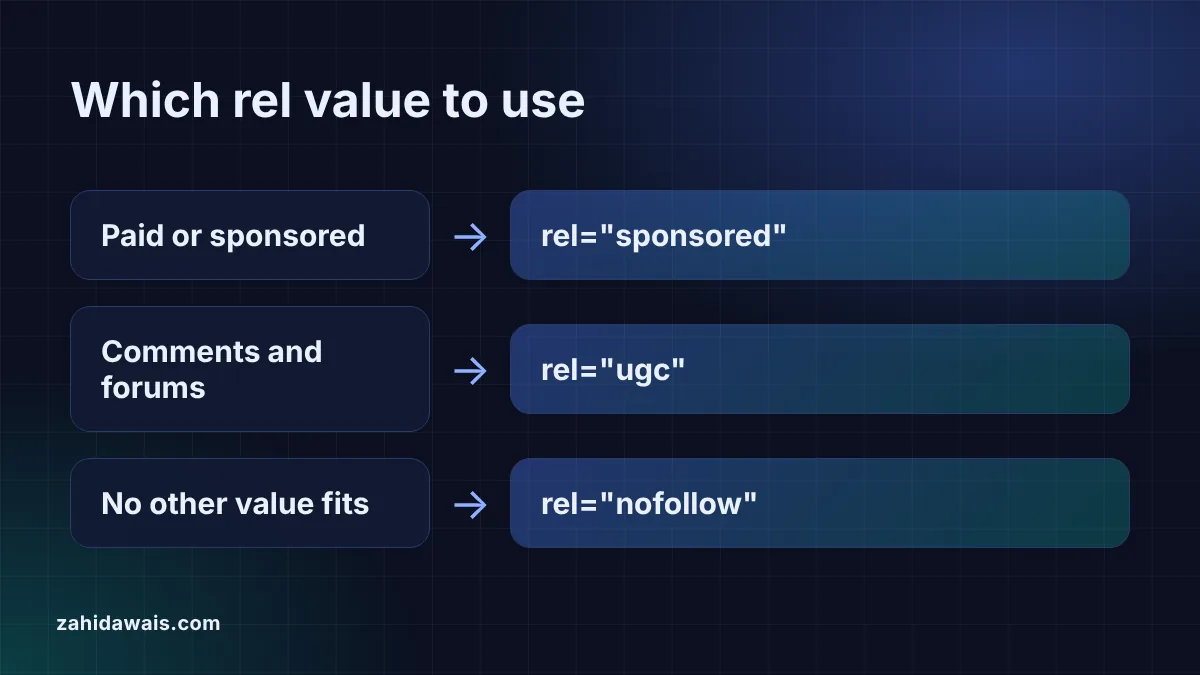
sponsored says why a link is not an endorsement, because it was paid for, while nofollow only says you do not vouch for it. Google’s guide to qualifying outbound links tells site owners to “mark links that are advertisements or paid placements (commonly called paid links) with the sponsored value.” It describes nofollow as the value to use “when other values don’t apply” and you would rather Google not associate your site with, or crawl the linked page from, your site.
The third value, ugc, is for user generated content: Google recommends “marking user-generated content (UGC) links, such as comments and forum posts, with the ugc value.” All three are written in the rel attribute of an <a> tag.
Match the value to the reason the link exists: money or other value exchanged means sponsored, content written by users means ugc, and anything else you do not want to vouch for means nofollow. A normal editorial link that nobody paid for needs no value at all; Google’s own example of a regular link has no rel attribute.
| Kind of link | rel value | Why |
|---|---|---|
| Paid guest post or sponsored post link | sponsored (or nofollow) | Money, goods or services were exchanged |
| Banner or text ad link | sponsored | It is an advertisement |
| Link in a blog comment or forum post | ugc (often ugc nofollow) | Written by a user, not by you |
| Link you must include but do not vouch for | nofollow | No other value applies |
| Editorial link you chose freely, nobody paid | none | A normal link needs no value |
Values can be combined. Google says “You may specify multiple rel values as a space- or comma-separated list”, for example rel=”ugc nofollow”. If you sell or buy guest posts, compare the two formats in guest post vs sponsored post before you decide how the link is marked.
Yes. Google says that for paid links “the nofollow attribute was previously recommended for these types of links and is still an acceptable way to flag them”, though sponsored is preferred. You do not have to rewrite old paid links that already carry nofollow to stay within the rules. For new placements, sponsored is the clearer choice because it states the reason, and rel=”sponsored nofollow” is also valid if your publisher prefers both.
Google lists it as link spam. Its spam policies name “buying or selling links for ranking purposes”, including “exchanging money for links, or posts that contain links” and “exchanging goods or services for links”. The same section says Google understands that buying and selling links is normal for advertising, and “it’s not a violation of our policies to have such links as long as they are qualified with a rel=”nofollow” or rel=”sponsored” attribute value”.
The policy also names paid articles that include “links with optimized anchor text in articles, guest posts, or press releases distributed on other sites”. That is why anchor text matters as much as the rel value. Run your anchors through the anchor text classifier to see how many are exact match or keyword heavy before you plan new placements.
Not completely. Google says links marked with these values “will generally not be followed”, but “the linked pages may be found through other means, such as sitemaps or links from other sites, and thus they may still be crawled.” To keep a page out of Google, the guide says to allow crawling and use the noindex rule instead. For your own internal links, Google points to robots.txt rules rather than nofollow.
For a full background on followed and unfollowed links, read dofollow vs nofollow links. To check which value a live page already uses, paste its URL into the nofollow link checker.
Add rel=”sponsored” inside the opening <a> tag, for example <a href="https://example.com/" rel="sponsored">Example</a>. In WordPress or any other editor, switch the block or post to its HTML view and type the attribute, or paste a finished tag. The sponsored link code generator writes the tag for you, with options for ugc, nofollow, a new tab with noopener, and a plain disclosure line for readers. For other rel combinations, the rel attribute generator covers the full list.
noopener and noreferrer are not alternatives to sponsored or nofollow. Google’s guide does not mention them; they only control browser behaviour when a link opens a new tab.
Example (illustrative, not a real order): a publisher on blog.example.org sells a guest post that links to https://example.com/link-building-guide/ with the anchor “link building guide”. Because money was exchanged, the link is written as <a href="https://example.com/link-building-guide/" rel="sponsored noopener" target="_blank">link building guide</a> with a line above it reading “Disclosure: this article contains a sponsored link.” A reader comment under the same post that links to example.net gets rel="ugc nofollow", and the author’s own unpaid link to a study gets no rel value.
Google says sponsored is preferred for paid links, and nofollow is still an acceptable way to flag them. Both keep a paid link within Google’s spam policies. sponsored is clearer because it tells Google the reason the link is not an endorsement.
Yes. Google allows several rel values on one link, separated by spaces or commas. rel=”sponsored nofollow” is valid and covers both values Google accepts for paid links, which suits publishers whose templates already add nofollow.
No, not if nothing was exchanged for the link and the editor chose to include it. Google’s spam policies focus on links bought, sold or traded for ranking. If any payment, product or service changed hands, mark the link sponsored.
Google recommends ugc for comments and forum posts. Many sites use rel=”ugc nofollow” together, which Google gives as an example of combining values. Either way, the link is marked as user generated rather than as your own recommendation.
Yes. The rel value is read by search engines and has no effect on people clicking the link. Readers still reach the page, so a sponsored placement on a relevant site can bring real referral traffic and brand exposure.
No. They are browser values that control what a new tab can access and whether the referring URL is sent. Google’s guide on qualifying outbound links does not list them, so a paid link still needs sponsored or nofollow.
This guide is part of my Link building guide.
Checked 23 Oct 2026. Facts checked against these official pages. Read how I check facts in my editorial policy.
Want links placed with honest anchors and the right rel values? See my link building service.
Digital PR vs link building explained: how each earns links, a side by side comparison, Google's paid link rules and a simple…
Read article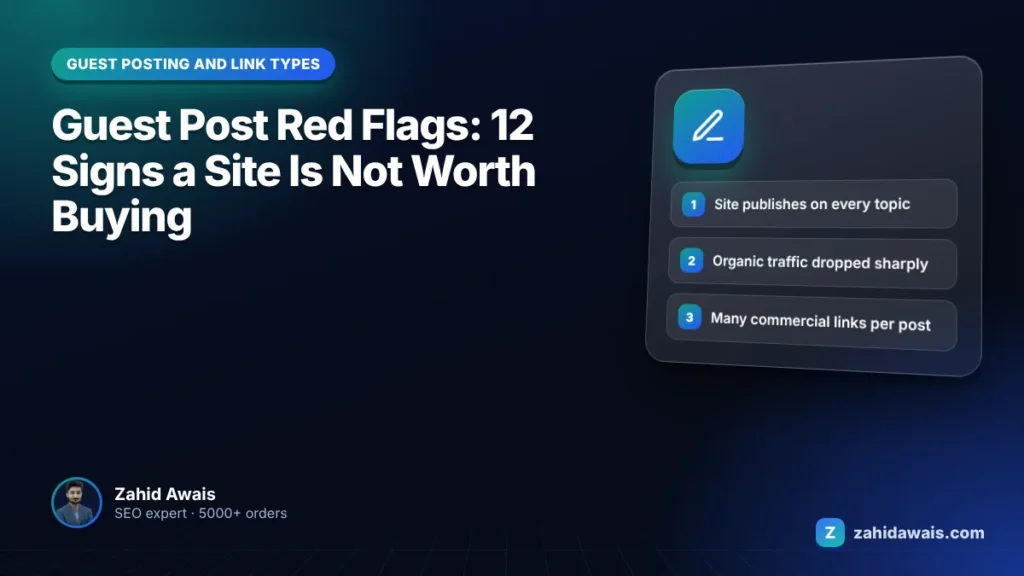
The 12 warning signs I check on every guest post site before a client's link goes anywhere near it.
Read article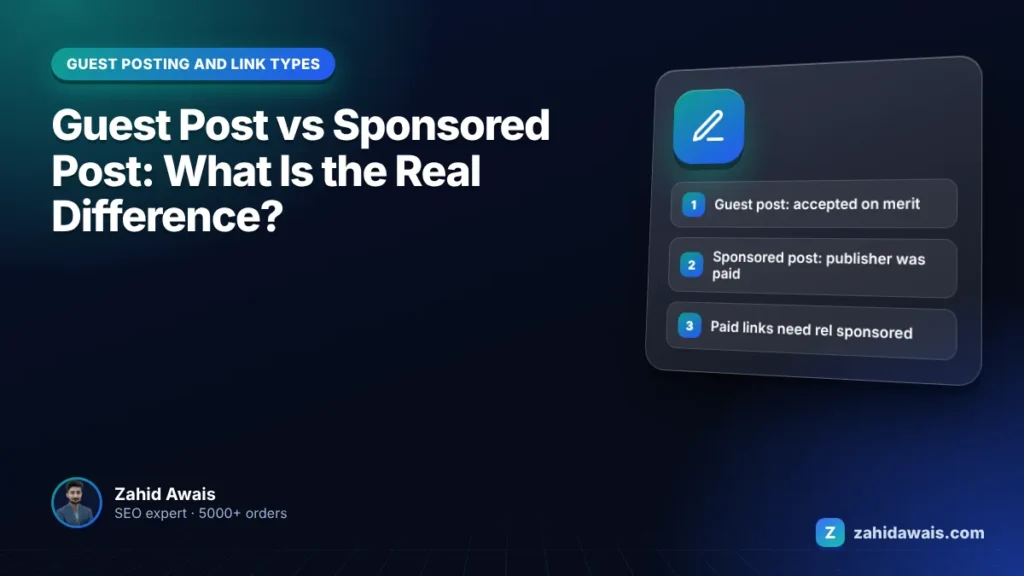
Most marketplace guest posts are sponsored posts. Here is why that matters for links, labels and Google's rules.
Read articleSend your website and I will reply with a free audit.