Guide
Guest posts vs PBN links: which is safer?
Both build backlinks, but they carry very different levels of risk.
ReadWhat I have learned from more than 5000 link building orders, explained step by step.
This link building guide is for business owners, marketers and new SEOs who want links that help rankings without putting their site at risk. Everything here comes from my own work on more than 5000 orders across Adsy, Legiit and other marketplaces.
Link building is the process of getting other relevant websites to link to yours. Good backlinks come from sites in your niche that have real traffic, sit inside useful text and are indexed by Google. Build them steadily, keep anchor text natural and follow Google’s link spam rules.
Link building means getting other websites to link to your pages, and it still matters because links remain one of the signals Google uses to judge which pages are trusted. A link from a respected site in your niche works like a recommendation. Wikipedia’s article on the backlink gives a simple history of how search engines started using them.
Links are not the only factor. Helpful content, technical health and a good page experience matter too, which is why I always start with an on-page SEO review before building links. In competitive niches, though, two pages with similar content are often separated by the quality of their links.
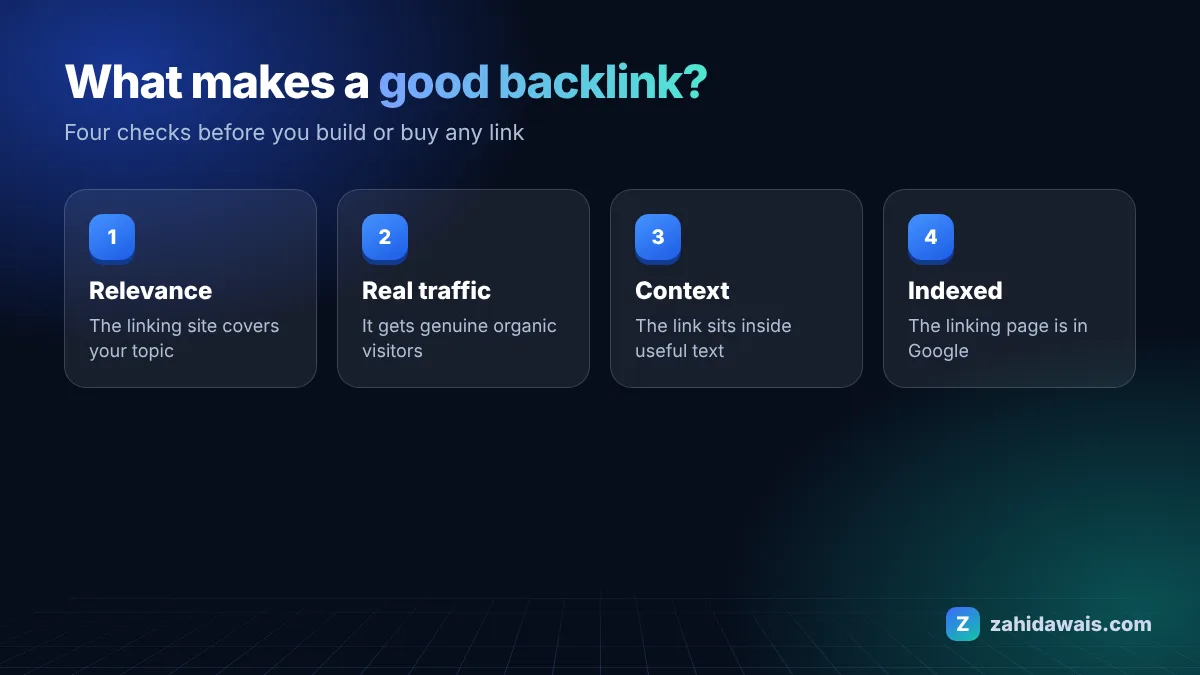
A good backlink comes from a relevant site with real organic traffic, sits inside useful content and is on a page Google has indexed. I check these four things before every placement, and the image above sums them up.
| Check | What to look for | Warning sign |
|---|---|---|
| Relevance | The site covers your topic or a close one | A tech blog linking to a bakery |
| Real traffic | Steady organic visitors in a tool like Semrush or Ahrefs | High authority score but almost no traffic |
| Context | Your link sits in a helpful paragraph | Footer links or long lists of unrelated links |
| Indexing | The linking page appears in Google | The page is blocked or not indexed |
The safest methods are links that make sense for readers: guest posts on real sites in your niche, brand mentions in news and industry content, and links you earn with useful tools or research. I explain the main options below.
Guest posts. You publish a helpful article on another site. See guest posts on niche blogs and Google News guest posts.
Brand mentions and digital PR. Your brand is named in news or industry articles, which also helps AI tools recognise you. See brand mentions on news sites.
Earned links. People link to free tools, original data and clear guides because they are useful. My own free SEO tools exist for this reason.
Supporting links. Web 2.0 posts, expired domains and Q&A answers can add variety, but they should never be your main strategy.
Google’s Google spam policies define link spam as links made mainly to manipulate rankings, and they list buying or selling links for ranking purposes as an example. The same page says paid or sponsored links are fine when they are marked with rel="sponsored" or rel="nofollow".
Google’s Google guide to qualifying outbound links recommends rel="sponsored" for advertisements and paid placements. In practice this means the safest long-term strategy is relevant content, real publications and links people would click, not large volumes of paid links built only to pass ranking credit. I compare the risk of each approach in guest posts vs PBN links.
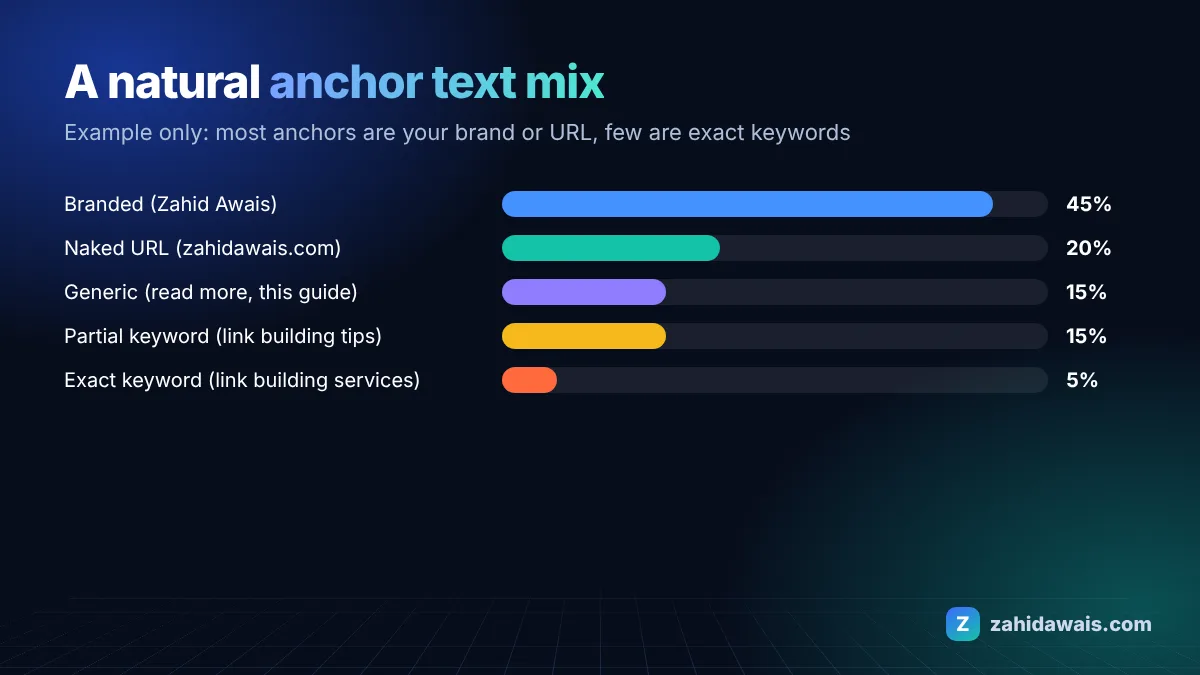
Most anchors should be your brand name or URL, with only a small share using exact keywords. Using the same keyword anchor again and again looks unnatural and is a common reason links stop helping.
Most small businesses start with 2 to 4 quality guest posts a month and adjust after 2 to 3 months of results. My own starting prices run from $10 for supporting links to $350 for an MSN.com placement, and the full breakdown is in how much link building costs.
If you want an instant estimate, use the price calculator on my home page.
Track organic traffic and rankings for the pages that receive links, not just your domain authority score. Check every link is live and indexed, and give each link several weeks to a few months to show its effect.
Google Search Console shows clicks, impressions and positions for each page, and its Links report lists the sites linking to you. If new pages are not getting indexed at all, read my guide to the crawled, currently not indexed status first.
A UK dental directory was getting about 880 organic visits a month in May 2026. I fixed the on-page basics, then built a small number of relevant links each month from health and local sites. By October 2026 Ahrefs showed about 3,400 visits a month. You can see the full details in the dental directory case study.
There is no fixed number. Compare your page with the pages ranking above it for the same keyword, look at how many relevant linking sites they have, and close that gap gradually with quality links.
Most links take several weeks to a few months to show their full effect. Google has to crawl the linking page first, then your rankings adjust over time.
Dofollow links can pass ranking signals, while nofollow, sponsored and ugc links are hints Google may or may not use. A healthy profile naturally includes both.
Google’s spam policies list buying links for ranking purposes as link spam. Paid links are allowed when marked rel="sponsored" or rel="nofollow".
Domain authority is a third-party score, not a Google metric. Relevance and real organic traffic matter more than any single score.
Google says it ignores most spammy links automatically. Problems usually come from links you built or bought yourself as part of a pattern, which can lead to a manual action.
Facts checked on 8 October 2026 against these official pages. Read how I check facts in my editorial policy and disclaimer.
Both build backlinks, but they carry very different levels of risk.
Read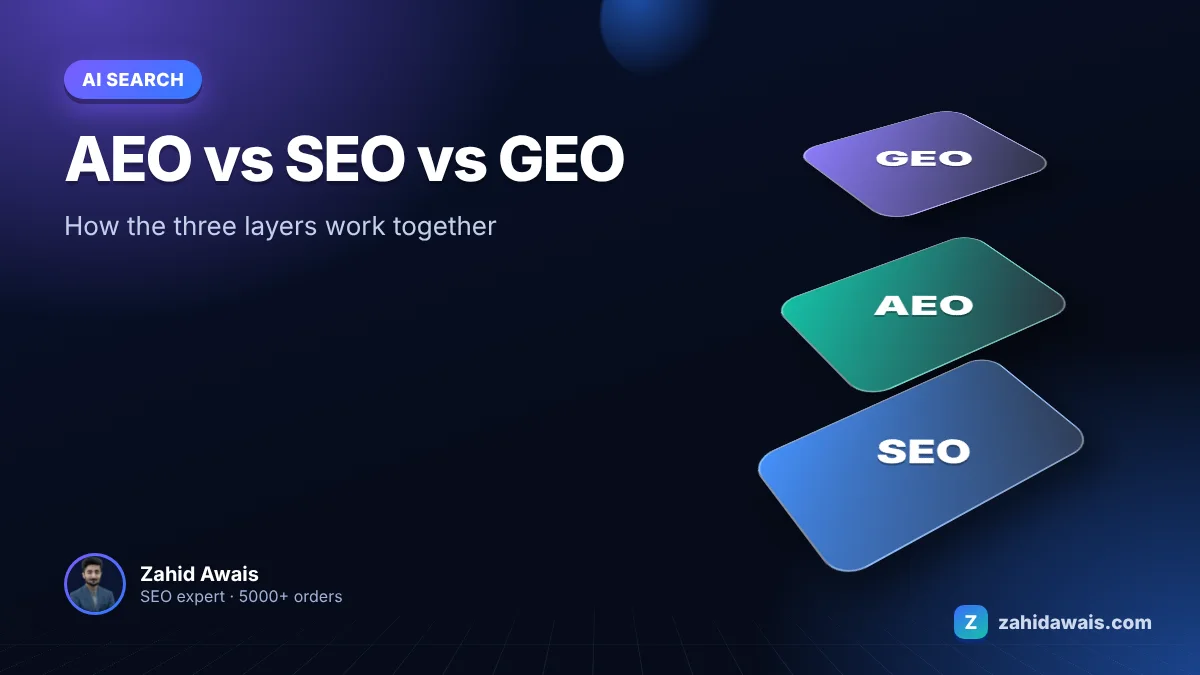
SEO helps you rank. AEO helps you become the answer. Here is how they fit together.
Read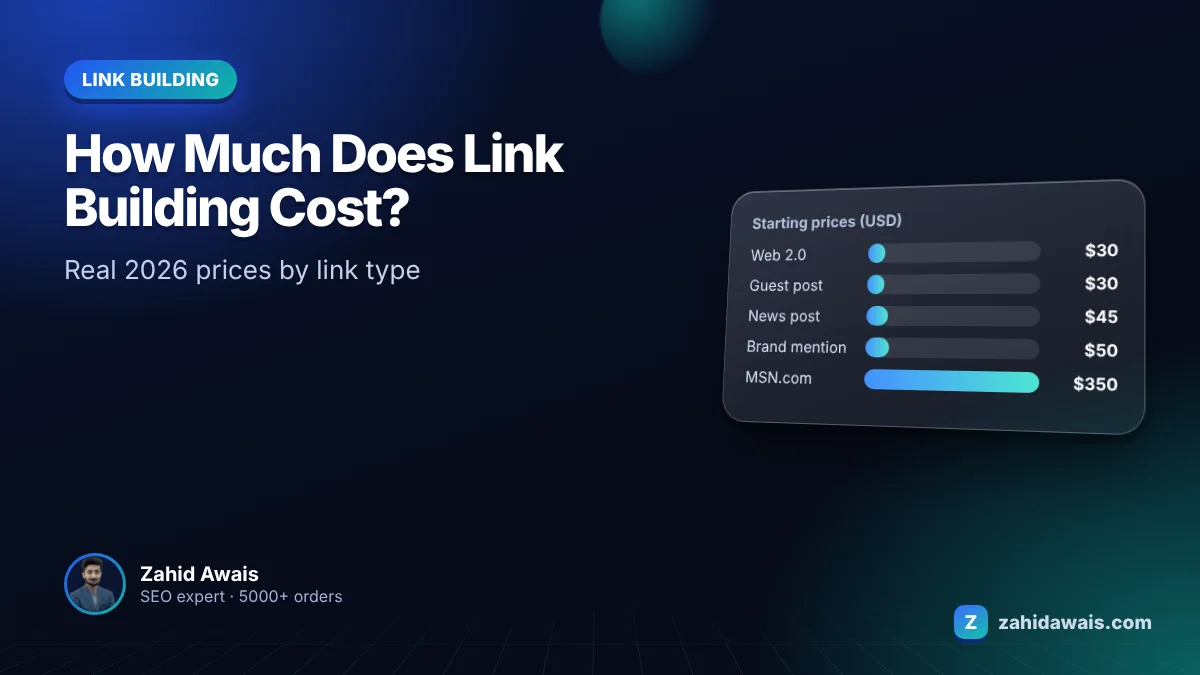
Real starting prices from my own services, and the factors that change them.
ReadSend your website and I will reply with a free audit.