Content SEO and writing
Does Passive Voice Hurt SEO? What Google Says and When to Fix It
Does passive voice hurt SEO? Google has no passive voice rule, but unclear sentences hurt readers. Learn when to rewrite, when to…
Read article
This guide is for writers, editors and site owners who see readability warnings in an SEO plugin and want to know whether they change rankings. You will learn what Google actually says, what readability SEO scores measure, where they mislead, and which edits make a page easier to read and easier to quote.
Readability does not affect SEO as a score. Google uses no Flesch score, transition word share or passive voice limit. Its guidance does ask whether content is easy to read, well organised and clearly written, because that is what helps people. Fix structure and unclear sentences for readers, and treat plugin scores as editing hints.
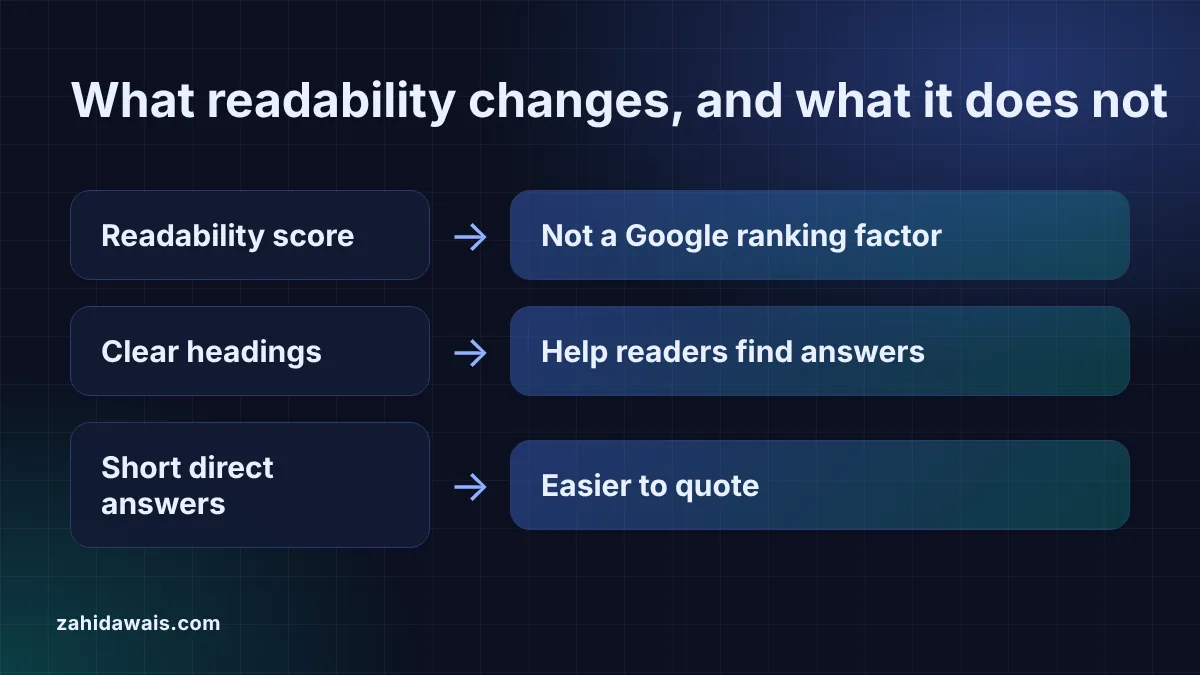
Google asks for clear, well organised writing, but it never mentions a readability score. Its SEO starter guide lists “The text is easy-to-read and well organized” as a sign of useful content and says to make sure the content is “well written, easy to follow, and free of spelling and grammatical mistakes”. It adds: “Break up long content into paragraphs and sections, and provide headings to help users navigate your pages.”
The guidance on creating helpful, people-first content asks whether content has “any spelling or stylistic issues” and whether it is “produced well, or does it appear sloppy or hastily produced”. It names “clear writing” as an example of the skill a page should show. It also asks whether you write to a set word count because you heard Google prefers one, and answers “No, we don’t.”
No Google documentation says so. Scores such as Flesch Reading Ease, a passive voice share or a transition word share come from writing formulas and SEO plugins, not from Google. Even Yoast, whose plugin shows these checks, writes on its Flesch Reading Ease page that the score “does not guarantee better rankings”. The table shows where each common target comes from.
| Readability check | Where the target comes from | Is it a Google rule? |
|---|---|---|
| Flesch Reading Ease around 60 | Flesch formula, as explained by Yoast | No |
| At least 30% of sentences with a transition word | Yoast SEO readability check | No, plugin guideline |
| At most 10% passive sentences | Yoast SEO readability check | No, plugin guideline |
| At most 25% of sentences over 20 words | Yoast SEO default for English | No, plugin guideline |
| Easy to read, well organised, headings | Google SEO starter guide | Guidance, no score |
So a green readability bullet is not a ranking signal, and a red one is not a penalty. What can matter is the thing the score tries to approximate: whether people understand the page quickly.
Most formulas measure only sentence length and word length. The Flesch Reading Ease formula, as Yoast describes it, is 206.835 minus 1.015 times the average sentence length minus 84.6 times the average syllables per word. Scores run from 0 to 100, higher means easier, and Yoast says “a score of around 60 is closer to plain English that a high school student would be expected to understand”.
That is also the limit. Yoast notes the score “only looks at sentence and word length, ignoring context, tone, and audience”, and in version 19.3 it “replaced the Flesch Reading Ease Score with the word complexity and sentence length assessments”. A short, simple sentence can still be wrong, vague or useless. Use the readability score checker to spot long, dense passages, not as a target.
It helps readers finish and trust the page, which is what Google’s guidance describes as helpful content. Clear structure also does practical work: headings let people jump to their question, and a short direct answer under each question heading is easier for a search feature or an AI answer to quote accurately. A page that buries its answer in a 40 word sentence makes every system, and every person, work harder.
The main levers are structure and clarity, not vocabulary. Question H2s with a direct first sentence, short paragraphs, lists for steps and tables for comparisons do more than swapping long words for short ones.
Start with structure, then fix sentences. Plan the headings first with the blog post outline generator, which builds question H2s, H3s and a quick answer slot from your topic and intent. After writing, run the draft through the transition words checker to see where ideas jump without a link such as however, as a result or for example.
Then look at the two biggest clarity problems. Use the sentence length checker to split sentences that carry two ideas, and read does passive voice hurt SEO? to decide which passive sentences hide who does what. Stop when the text reads clearly aloud, even if a plugin bullet is still orange.
Example: take an 8 sentence paragraph about keyword research written with no linking words: “Keyword research comes first. Many site owners skip it. They write about topics nobody searches for. The posts get no traffic…” The transition words checker shows 0 of 8 sentences with a transition, 0%. Adding However, As a result, For example, Then and In short, and changing “not” to “instead of”, at the points where the logic turns gives 5 of 8 sentences with a transition, 62.5%, with 6 transition words in total. The facts did not change; the reader no longer has to guess how each sentence relates to the last.
Google documents no readability score as a ranking factor. Its guidance asks for content that is easy to read, well organised and free of spelling and grammar mistakes. Treat readability as part of making a helpful page, not as a number to optimise.
There is no required score. Yoast explains that a score around 60 is close to plain English a high school student should understand. Technical or legal pages can score lower and still be right for their audience, so judge clarity, not the number.
No. The Yoast readability analysis runs inside the WordPress plugin and only you see it. Google does not read your plugin scores. Yoast itself says the Flesch score does not guarantee better rankings.
No source we checked gives a readability threshold for AI answers. Short, self contained answers under clear question headings are easier for any system to quote accurately, so the same edits that help readers also suit AEO and GEO.
Google sets no grade level. Write for your audience: a page for beginners needs plainer words than a page for developers. Short sentences, familiar terms and clear headings help almost every audience, whatever the formula says.
Only when a page is hard to follow or you are updating it anyway. Rewriting just to change a score rarely moves rankings. Focus updates on accuracy, missing answers and structure, and fix unclear sentences along the way.
This guide is part of my SEO content writing guide.
Checked 23 Oct 2026. Facts checked against these official pages. Read how I check facts in my editorial policy.
Need articles or page copy written for readers and search? See my content writing service.
Does passive voice hurt SEO? Google has no passive voice rule, but unclear sentences hurt readers. Learn when to rewrite, when to…
Read article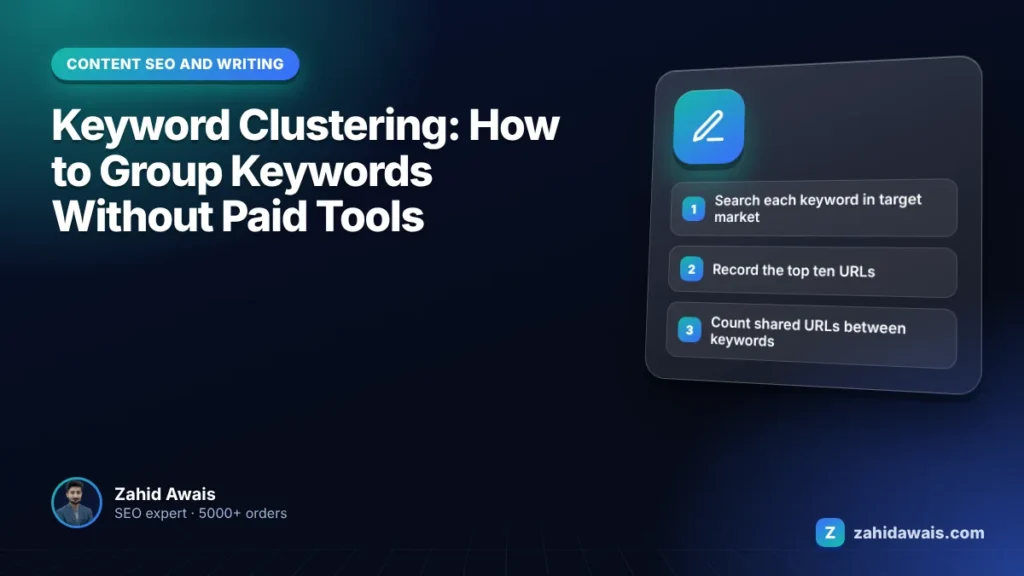
A manual SERP overlap method to group keywords into pages, so you write one strong page per intent instead of many competing ones.
Read article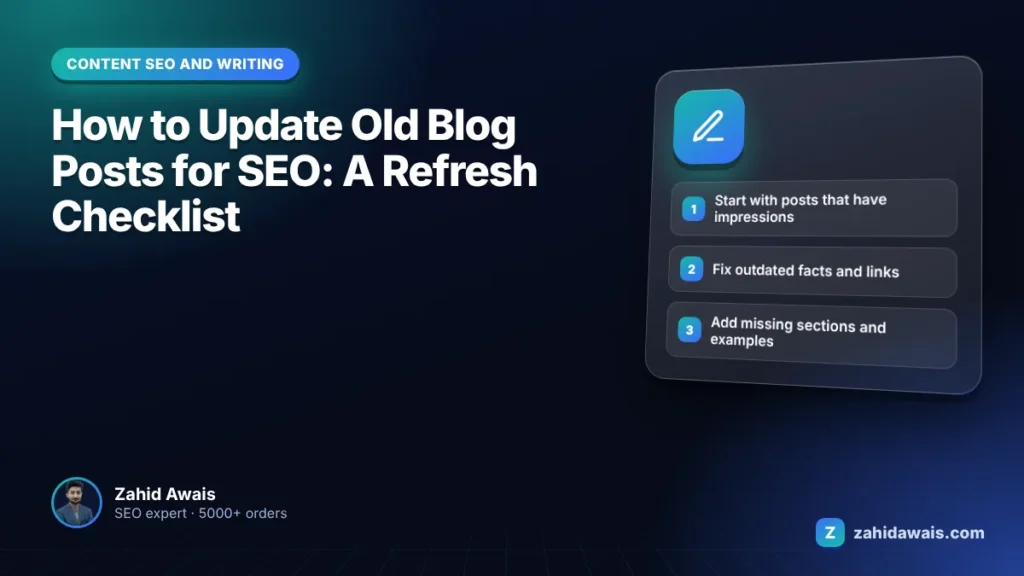
A practical refresh checklist for old posts, covering what to change, when to update the date and when a URL change is worth it.
Read articleSend your website and I will reply with a free audit.