Guest posting and link types
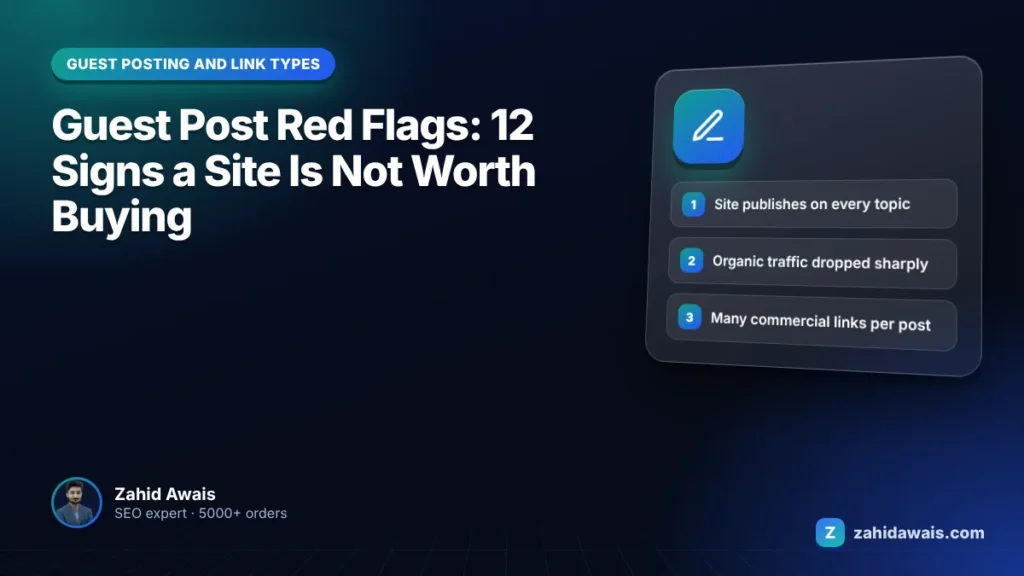
Guest Post Red Flags: 12 Signs a Site Is Not Worth Buying
The 12 warning signs I check on every guest post site before a client's link goes anywhere near it.
Read article
People often treat digital PR and link building as rivals. The digital pr vs link building question is really about method: one is a way of earning links, the other is the wider job of getting them. This guide shows where they overlap, where they differ and how to choose.
Link building is the whole practice of getting other sites to link to yours. Digital PR is one method inside it, where you pitch stories, data or expert comments to journalists and earn links from news coverage. Link building also covers guest posts, niche edits and outreach, which are more predictable but give you less authority per link.
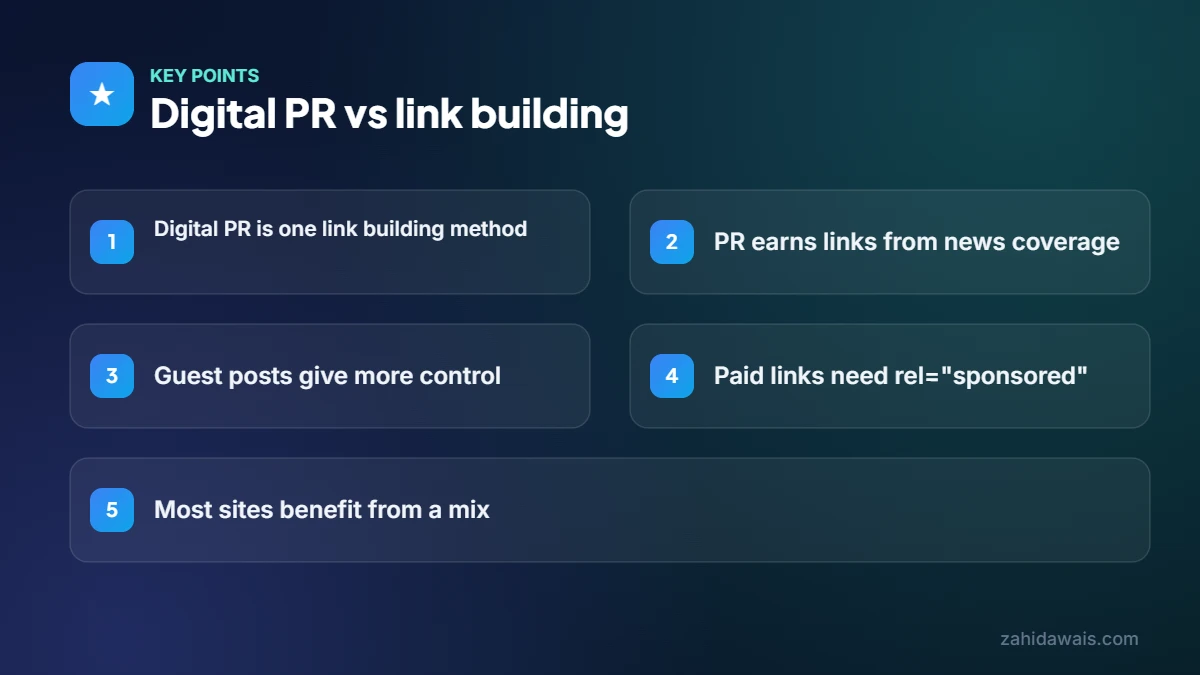
The difference is scope: link building is the goal of earning links by any fair method, and digital PR is one method that earns links through press coverage.
Think of link building as the toolbox and digital PR as one tool. Other tools in the same box include guest posts, niche edits, resource page outreach and broken link outreach. Each tool suits a different job.
A few terms will help as you read:
Digital PR earns links by giving journalists something they want to publish, such as new data, an expert quote or a fast reaction to breaking news.
The journalist writes the article. They decide whether to mention you and whether to add a link. That makes the link editorial, which is why digital PR links often come from sites that are very hard to reach any other way.
The cost of that authority is control. You cannot choose the anchor text, the page that gets linked, or even whether a link appears at all. Sometimes you get a brand mention with no link. That still has value, which I explain in brand mentions vs backlinks.
I run digital PR as a service too. My digital PR link building page covers the campaign types I use.
Traditional link building works by finding relevant sites and agreeing a placement, usually a guest post on the site or a link added to an existing article.
The big strength is predictability. You pick the site before you start. You can agree the topic, the target page and a natural anchor. That makes it easier to support specific pages, such as a service page or a product category.
The main risk is quality. Some sites exist only to sell links. I check traffic, topic, outbound link patterns and editorial standards first. My guide on how to check guest post site quality lists the checks.
Digital PR wins on authority and reach, while classic link building wins on control, speed and predictability.
| Factor | Digital PR | Classic link building |
|---|---|---|
| Main source of links | News and media coverage | Blogs, niche sites, existing articles |
| Control over anchor text | Very low | High |
| Control over target page | Low, often the homepage or study | High, any page you choose |
| Predictability | Low, results vary by campaign | High, sites agreed first |
| Typical lead time | Weeks of research and pitching | Days to a few weeks |
| Brand reach | High, real readers see the story | Moderate, depends on the site |
| Paid link rule | No payment to journalists for links | Paid placements need rel=”sponsored” |
Google says paid links are allowed only when they are qualified with rel=”sponsored” or rel=”nofollow”, and that rule applies to both methods.
The Google spam policies list “buying or selling links for ranking purposes” as link spam. They also list “sending someone a product in exchange for them writing about it and including a link.” So a digital PR campaign that gifts products for links breaks the same rule as a paid guest post without a label.
Google’s guide to qualifying outbound links says to mark paid placements “with the sponsored value.” In practice, any paid link should carry rel=”sponsored”. The policy also names “exchanging money for links, or posts that contain links”, so paying for a post does not get around the rule.
The same policy lists “excessive link exchanges” and “low-quality directory or bookmark site links” as link spam. Whichever method you use, the safest test is simple: would this link exist if search engines did not? Editorial coverage and genuinely useful guest posts pass that test. Bulk directory links and swap deals usually do not.
Choose based on your goal: use classic link building to support specific pages on a steady plan, and add digital PR when you want authority, reach and trust at a brand level.
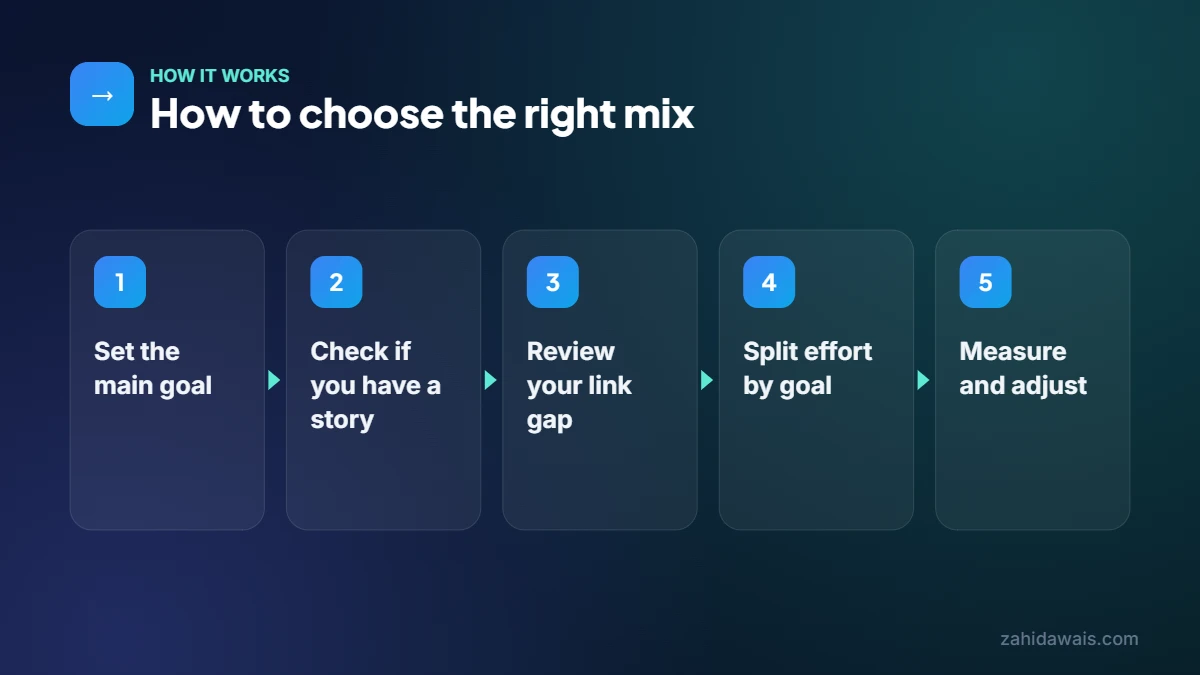
I use a simple five step method with clients:
This is an illustrative example with made up names. A small accounting software firm, example-ledger.com, wants its “invoice templates” page to rank. It also wants to be seen as a trusted name in small business finance.
For the page, classic link building fits: relevant guest posts on small business blogs, linking to the templates page with natural anchors. For the brand, a digital PR angle fits: an anonymised look at how long small firms wait to get paid, pitched to business journalists. One method supports a page, the other builds the name.
Most sites benefit from both over time. Results from either method take months, not weeks, as I explain in how long backlinks take to work. If you want help planning the mix, my link building services cover both approaches.
Neither is better in every case, because digital PR is part of link building. Digital PR suits brand authority and reach. Classic methods such as guest posts suit steady links to specific pages. Most sites do best with a mix that matches their goals.
It usually needs more upfront work, such as research, data and a written asset, before any link appears. Guest posts have a clearer cost per placement. The real comparison is value per link, which depends on the sites and your goals.
Editorial links from real news coverage are very unlikely to cause harm. Problems start when campaigns trade money, gifts or products for links without a sponsored label, because Google’s spam policies treat that as link spam.
Not always. Many small businesses grow well with relevant guest posts, local citations and good content. Digital PR becomes worth it when you have a real story, unique data or an expert who can comment on news in your field.
Journalists usually link to the brand or the study they are quoting, not a sales page. That builds overall site authority. You can then pass that value to key pages through clear internal links from the study or homepage.
Yes, they build awareness and help people and AI tools connect your brand with a topic. Google’s documentation does not say unlinked mentions are a ranking factor, so treat them as a bonus and follow up where a link would help readers.
Facts checked against these official pages. Read how I check facts in my editorial policy.
The 12 warning signs I check on every guest post site before a client's link goes anywhere near it.
Read article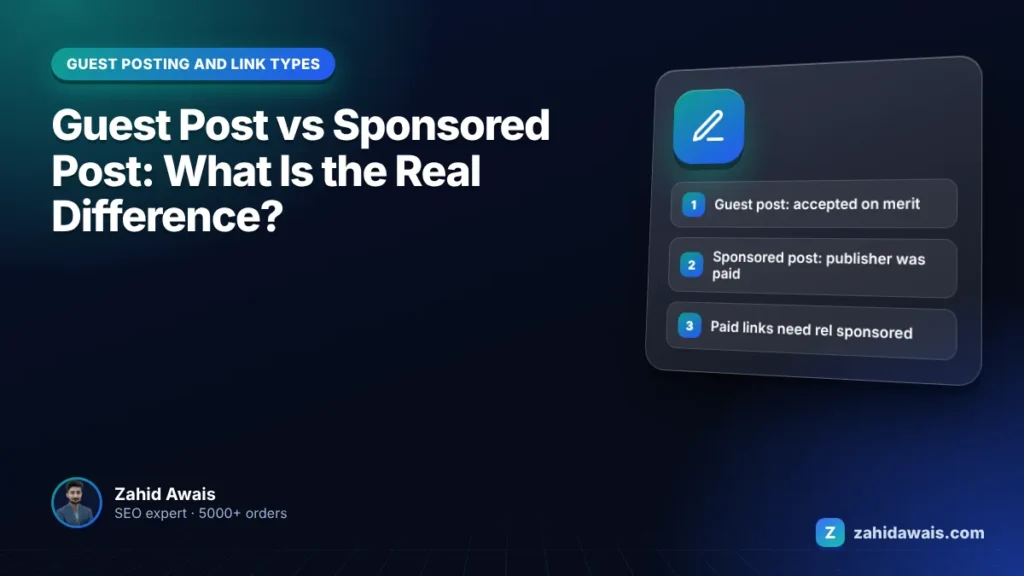
Most marketplace guest posts are sponsored posts. Here is why that matters for links, labels and Google's rules.
Read article
Three fast checks I run before paying a premium for any site sold as Google News approved.
Read articleSend your website and I will reply with a free audit.