AI search (AEO and GEO)
GEO vs SEO: The Real Differences and Where to Focus First
GEO is mostly SEO with a different scoreboard. Here is what actually changes, what does not, and where to start.
Read articleSites that cover one topic deeply tend to rank for more of it, faster. Topical authority is not a score; it is the result of complete, well-linked coverage plus outside recognition.
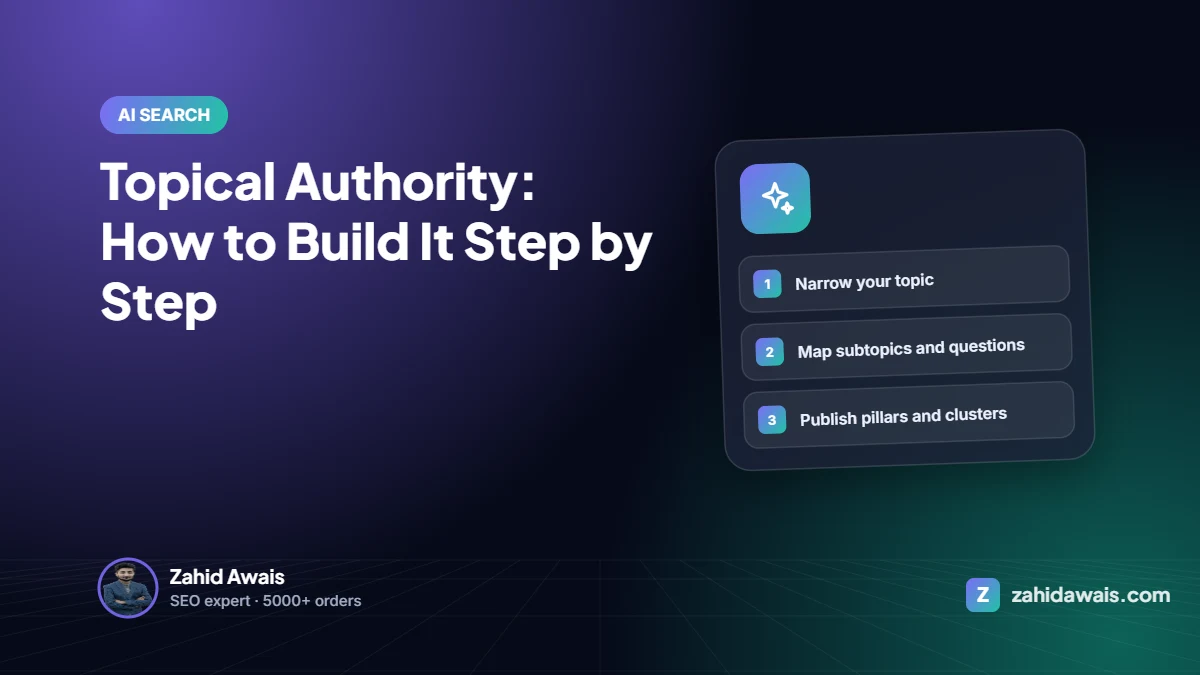
This guide shows how to build topical authority, the approach behind this whole site. It is part of my AI search optimization guide.
Topical authority is the trust a site earns on a subject by covering it completely and well, so search engines prefer it for related searches. Build it by choosing a focused topic, mapping every subtopic and question, publishing pillar pages with supporting clusters, linking them tightly, adding real expertise, and earning links and mentions from sites in the same field.
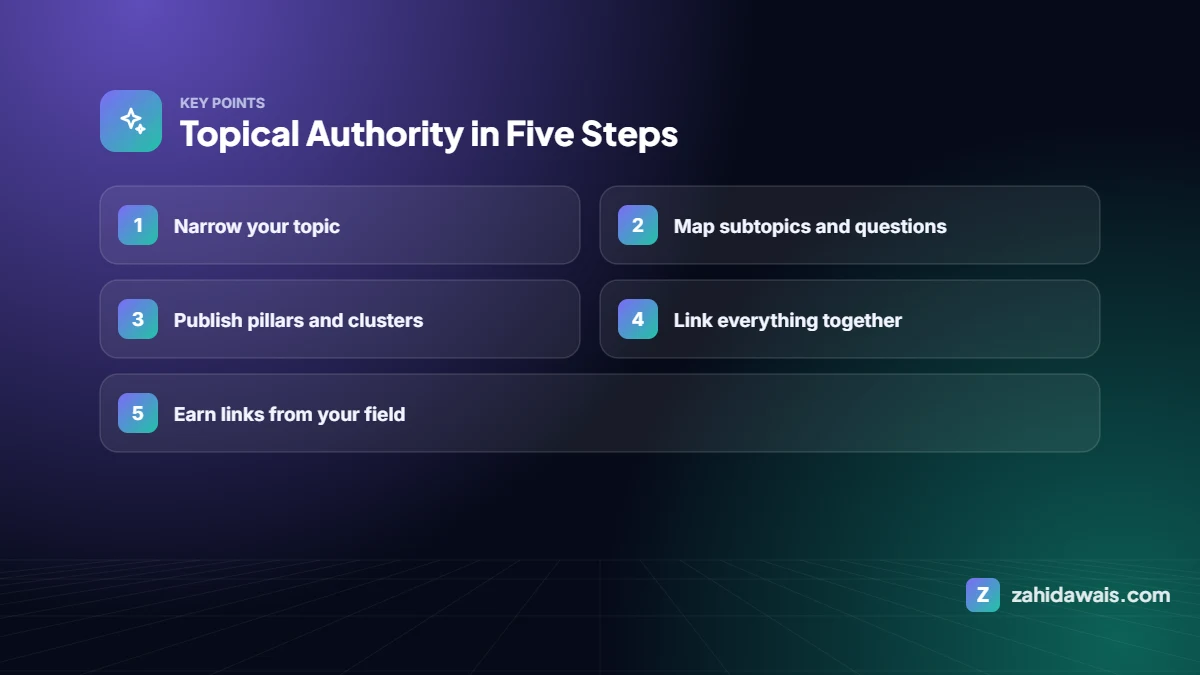
Google does not publish a “topical authority score”. The term describes a pattern: when a site consistently publishes helpful, expert content on one subject and others in that field reference it, its pages tend to rank more easily across that subject. Tool metrics that claim to measure it are estimates.
| Signal | Where to see it |
|---|---|
| New articles rank faster | Search Console, first impressions within days |
| More long-tail queries per page | Search Console query count per URL |
| Pillar pages climb without new links | Average position over time |
| Others cite your guides | New referring domains to guide pages |
| AI tools mention your brand for the topic | Manual checks in ChatGPT, Perplexity, AI Overviews |
This site is built around seven pillars (link building, on-page, technical, local, e-commerce, AI search and content SEO). Each pillar has a guide, supporting articles and free tools, all linked to the matching service. See semantic SEO for the planning method.
I optimise your site for AI Overviews, ChatGPT and Perplexity: answer-first content, entity and schema fixes, and brand mentions on sites AI tools cite.
The trust a site earns on a subject by covering it completely and well, so it ranks more easily across related searches.
Google does not name it as a single factor, but its systems aim to reward expert, helpful sources on a topic.
Enough to cover the important subtopics and questions well. For many niches that is dozens of pages per pillar, built over time.
Yes. A narrow focus helps small sites compete with broad, general sites.
Yes. Links and mentions from sites in the same field reinforce that others see you as an authority.
Facts checked against these official pages on 10 October 2026. Read my editorial policy.
GEO is mostly SEO with a different scoreboard. Here is what actually changes, what does not, and where to start.
Read article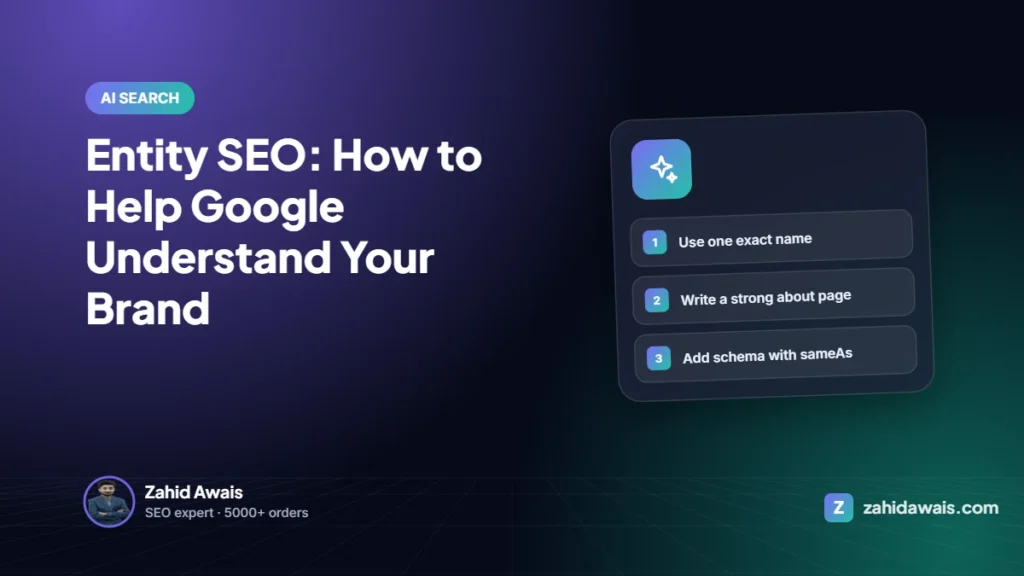
Google and AI tools think in entities: people, companies, places and things they can identify. Entity SEO makes sure your brand is one of them, with facts that agree everywhere.
Read article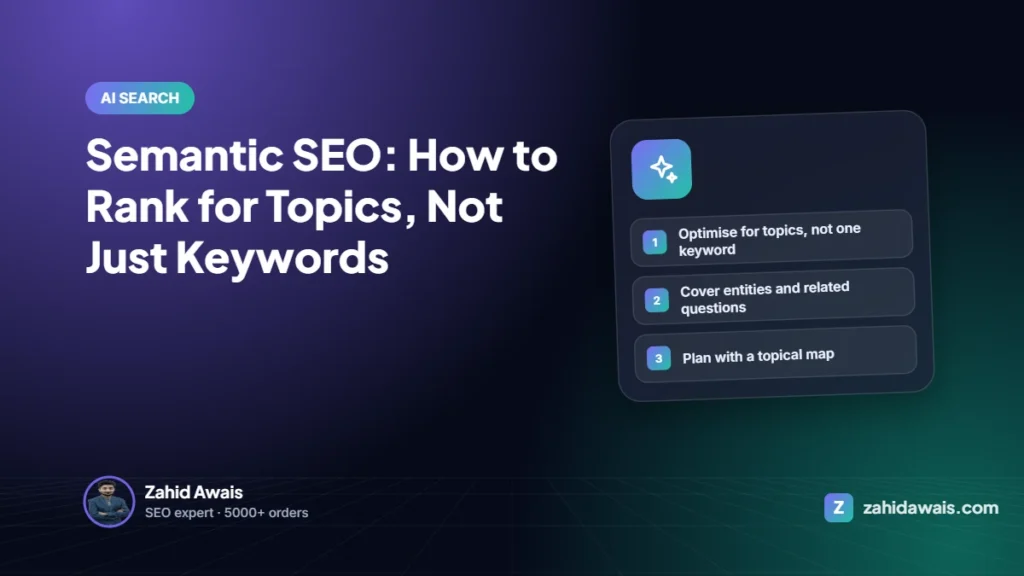
Google and AI tools understand topics and entities, not just matching words. Semantic SEO is how you build a site that covers a topic so well that both trust it.
Read articleSend your website and I will reply with a free audit.