AI search (AEO and GEO)
Google AI Mode SEO: How to Show Up in AI Mode Answers
AI Mode runs many searches behind one question. Pages that answer the sub questions clearly get more chances to be linked.
Read article
Many site owners ask why an AI answer cites one page and ignores another. This guide explains how ai tools choose sources, using only what OpenAI, Google and Perplexity say in their own documentation. Where the companies say nothing, I say so too.
ChatGPT search, Google AI Overviews and AI Mode, and Perplexity all search the web live, then cite pages they can crawl and use. Each company publishes access rules: allow OAI-SearchBot, be indexed and snippet-eligible in Google, and allow PerplexityBot. None of them publishes a full ranking formula for citations.
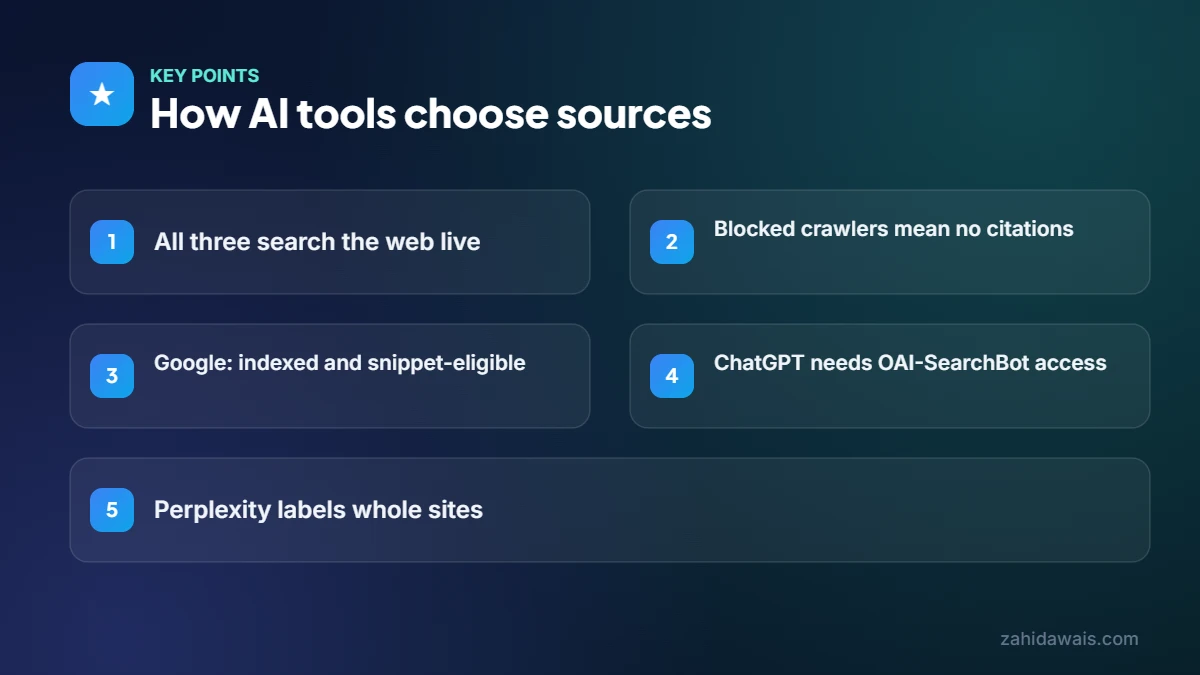
AI search tools choose sources by running a web search for your question, reading the pages that come back, and citing the ones they use in the answer.
Some terms help here:
The key point is that access comes first. If a tool’s crawler cannot reach your page, the tool cannot cite it. After that, the companies describe goals such as relevance and authority, but not exact weights.
ChatGPT search picks sources by searching the web when a question needs fresh information, then showing inline citations to the pages it used.
OpenAI’s ChatGPT search help page says “ChatGPT will automatically search the web if your question might benefit from information on the web.” Users can also start a search by hand. The same page says answers include inline citations, and a Sources button lists the cited pages and other relevant links. It also names “third-party search providers such as Bing” as partners that may receive disassociated search queries.
For site owners, OpenAI’s crawler documentation is the most useful part. It says “OAI-SearchBot is used to surface websites in search results in ChatGPT’s search features.” It also says “sites that are opted out of OAI-SearchBot will not be shown in ChatGPT search answers.” A separate bot, GPTBot, controls training use. OpenAI says each setting is independent, so you can block training and still appear in search.
OpenAI’s publisher FAQ says “any public website can appear in ChatGPT search.” It adds that ChatGPT includes utm_source=chatgpt.com in referral URLs, so you can track visits in analytics. OpenAI does not publish a ranking formula. My guide on how to get cited by ChatGPT covers practical steps.
Google AI Overviews and AI Mode choose supporting links from pages that are indexed and eligible to show a snippet in Google Search, often using several related searches at once.
Google’s AI features and your website page says both features may use “query fan-out,” which means issuing “multiple related searches across subtopics and data sources.” That is why an AI answer can cite pages that do not rank on page one for the exact query.
To be a supporting link, Google says a page must be “indexed and eligible to be shown in Google Search with a snippet.” It also says “there are no additional requirements to appear in AI Overviews or AI Mode, nor other special optimizations necessary.” In short, the same SEO basics apply. You can limit what appears using nosnippet, data-nosnippet, max-snippet or noindex.
Google also says AI Overviews appear only when its systems decide they are “additive to classic Search.” So not every query shows one. For more detail, read my guide on how to rank in Google AI Overviews.
Perplexity picks sources by searching the internet in real time and building an answer with numbered citations that link to the original pages.
Perplexity’s help centre says it gathers information “from authoritative sources like articles, websites, and journals.” It says “each answer includes numbered citations linking to the original sources.” Its crawler documentation says “PerplexityBot is designed to surface and link websites in search results on Perplexity” and is not used to train foundation models.
Perplexity also explains source labels. Some cited domains carry a Government, Academic or Trusted label. Its help page says “Perplexity rates the whole website a source comes from, not each individual page.” The review checks things like whether a site corrects mistakes, says who wrote each piece, and keeps news apart from ads and opinion. It also says “no label does not mean a site is low quality.” My Perplexity ranking guide goes further.
All three tools retrieve live web pages and cite them, but each uses its own crawler and access rules.
| Factor | ChatGPT search | Google AI Overviews and AI Mode | Perplexity |
|---|---|---|---|
| Crawler to allow | OAI-SearchBot | Googlebot (normal Search crawling) | PerplexityBot |
| Basic eligibility | Public site, crawler not blocked | Indexed and snippet-eligible | Crawler not blocked |
| How citations show | Inline citations and a Sources button | Supporting links in the answer | Numbered citations |
| Stated search method | Searches when the question needs the web | Query fan-out across subtopics | Real-time internet search |
| Published quality signal | None stated | Same as Search, no extra steps | Site-level source labels |
| Training control | GPTBot, separate from search | Not covered on the AI features page | PerplexityBot not used for training |
You make pages easier to cite by first allowing each crawler, then writing clear, well-sourced answers that a tool can lift and link.
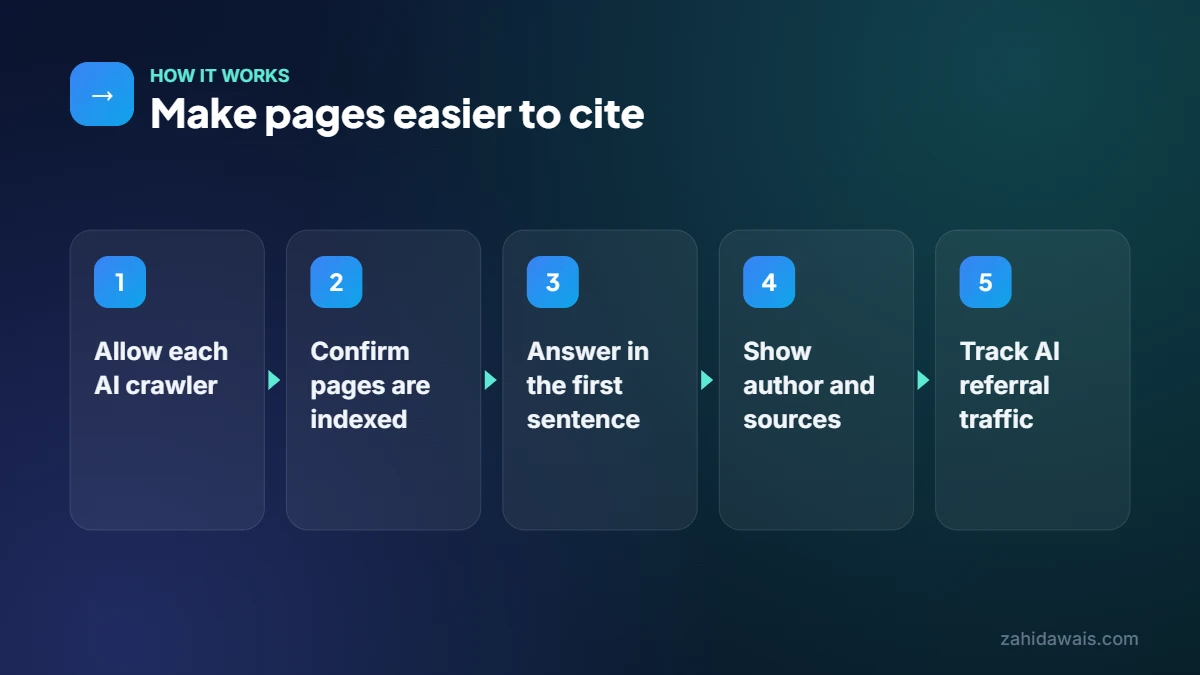
Brand mentions on trusted sites can also help tools connect your name with a topic. Clear entities help too, as explained in my entity SEO guide.
This is an illustrative example with made up names. A plumbing firm runs example-plumbing.com. Its robots.txt blocks all bots except Googlebot, copied from an old template. It appears in Google AI Overviews but never in ChatGPT search or Perplexity.
The fix is to allow OAI-SearchBot and PerplexityBot. OpenAI says robots.txt changes can take about 24 hours to take effect for search. After that, the firm adds direct answers to its “how to fix a leaking tap” page and tracks utm_source=chatgpt.com visits each month.
If you want help with this work, my GEO services cover AI search visibility from crawler access to content.
No. Google says AI Overviews and AI Mode may use query fan-out, running several related searches, so cited pages can come from beyond the top results. ChatGPT and Perplexity run their own searches and do not say they copy Google rankings.
Not according to OpenAI. Its crawler docs say each setting is independent. GPTBot covers training, while OAI-SearchBot covers search. Blocking OAI-SearchBot is what removes a site from ChatGPT search answers.
Google says no. Its documentation states there are no additional requirements or special optimizations to appear in AI Overviews or AI Mode. A page needs to be indexed and eligible to show a snippet in Google Search.
Perplexity’s help page on source labels says labels are set by its source review process alone, and partnerships or payments do not affect them. It does not describe any paid way to be cited in answers.
OpenAI says ChatGPT adds utm_source=chatgpt.com to referral URLs. In your analytics tool, filter sessions by that source to see visits that came from ChatGPT answers, as long as OAI-SearchBot can reach your site.
No. OpenAI, Google and Perplexity publish access and eligibility rules, plus some quality goals, but none shares an exact ranking formula for citations. Be careful with any claim that lists precise citation weights.
Facts checked against these official pages. Read how I check facts in my editorial policy.
AI Mode runs many searches behind one question. Pages that answer the sub questions clearly get more chances to be linked.
Read article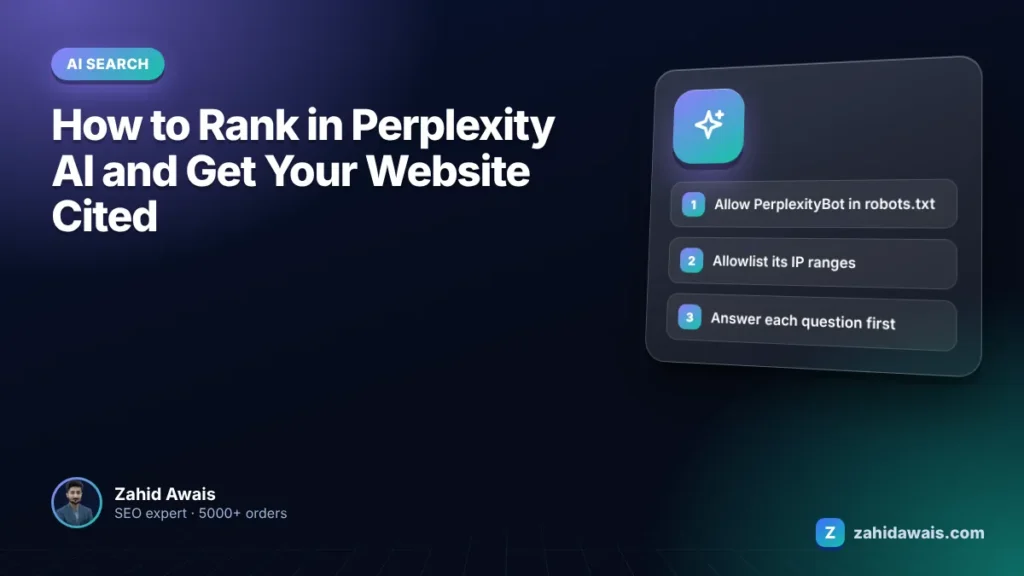
Perplexity shows its sources next to every answer. Being one of them starts with letting PerplexityBot in.
Read article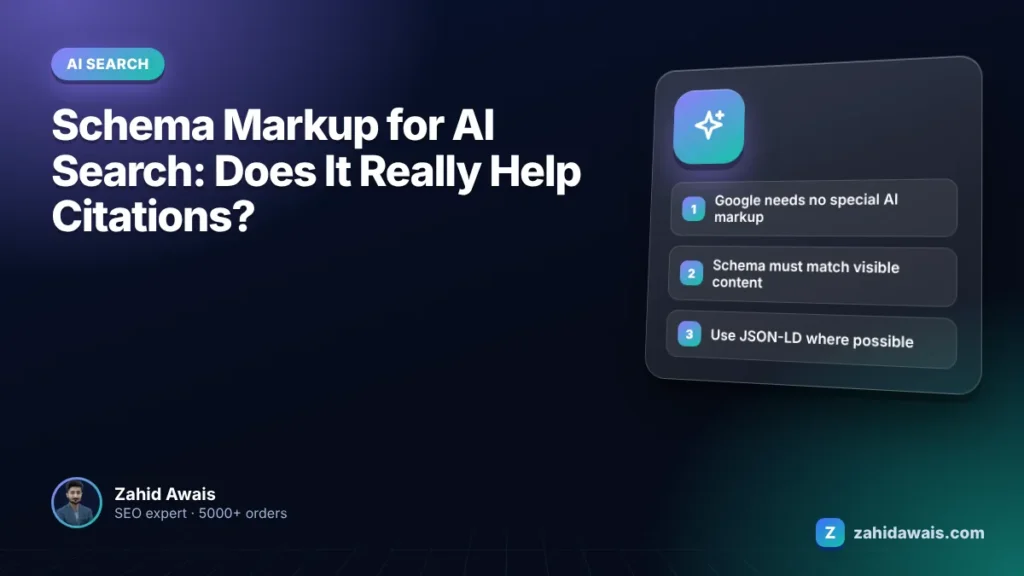
Schema helps machines understand your pages, but Google says no special markup is needed for its AI features. Here is the balanced view.
Read articleSend your website and I will reply with a free audit.