AI search (AEO and GEO)
How AI Tools Choose Sources: ChatGPT, Google and Perplexity
How AI tools choose sources, from official docs only: how ChatGPT search, Google AI Overviews and AI Mode, and Perplexity find, pick…
Read articleAI Mode runs many searches behind one question. Pages that answer the sub questions clearly get more chances to be linked.
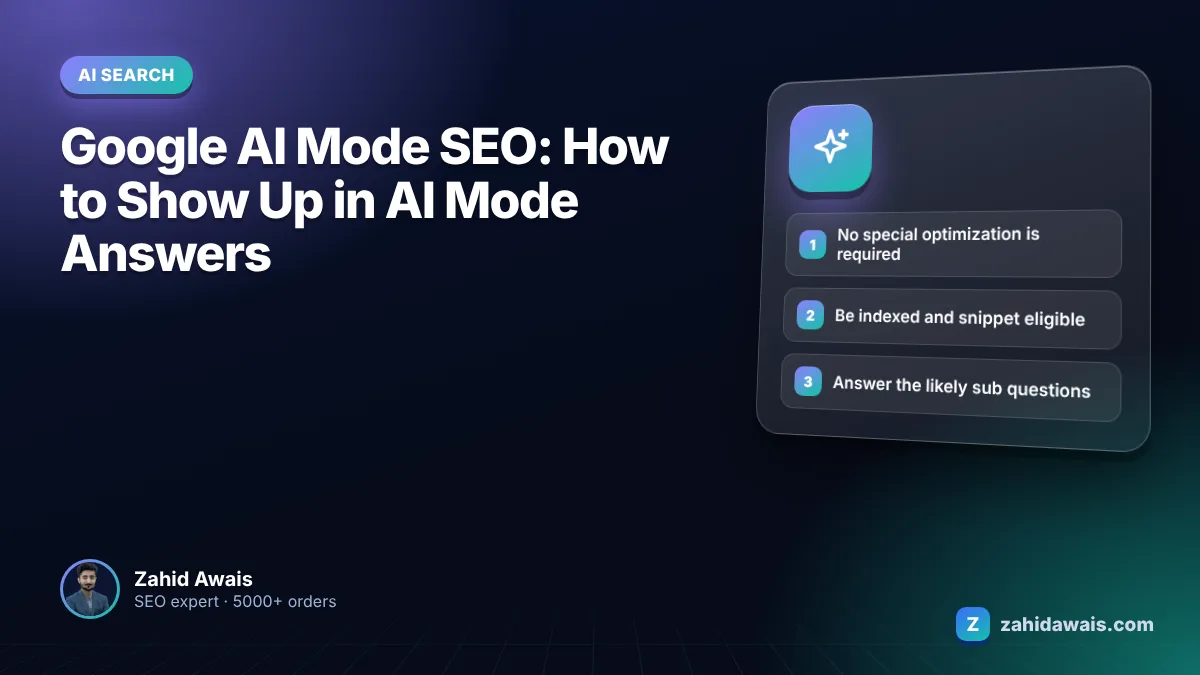
This guide explains Google AI Mode SEO in practical terms: how AI Mode picks links, what Google says you need, and how to measure the traffic it sends.
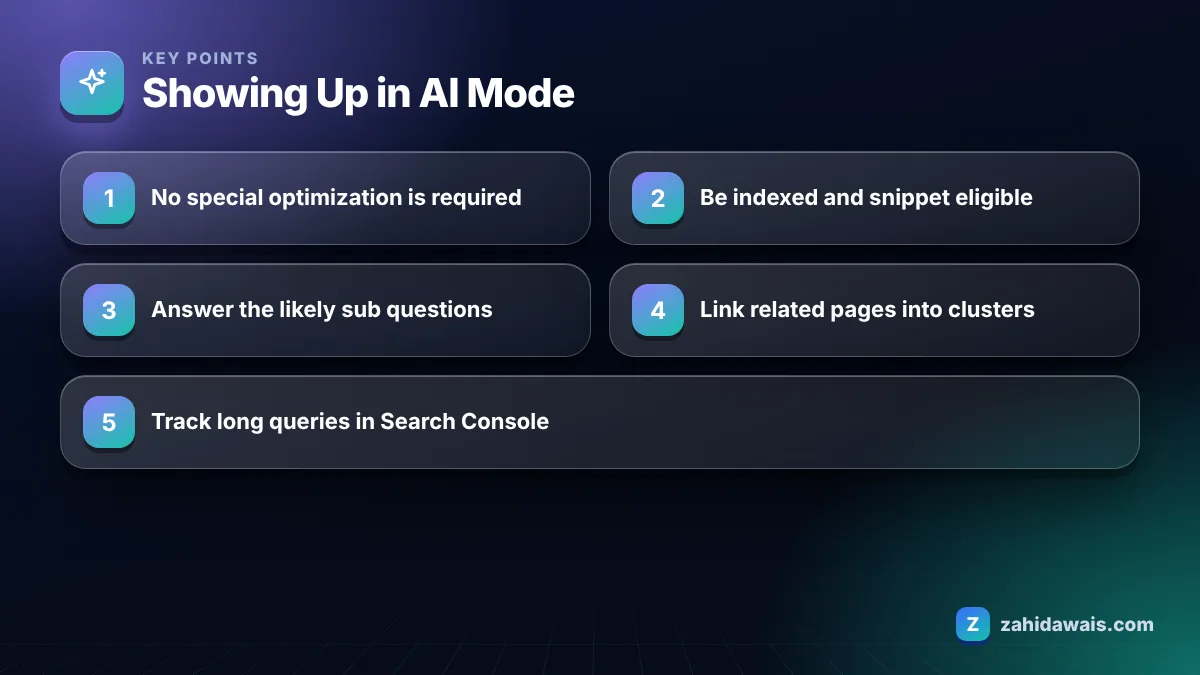
Google AI Mode SEO is ordinary SEO applied with query fan-out in mind. Google says there are no extra requirements for AI Mode: pages must be indexed and snippet eligible. Because AI Mode runs several related searches per question, pages that clearly answer specific sub questions get more chances to be linked.
AI Mode is a separate, conversational search experience where the whole result is an AI generated answer with links, while AI Overviews are a summary block shown on top of a normal results page. In AI Mode, users can ask follow up questions in the same thread, so one session can touch many related topics.
Both features use the same foundations. Google’s guide to AI features and your website covers AI Overviews and AI Mode together and says both may use query fan-out: issuing multiple related searches across subtopics and data sources to build a response. Google adds that this lets them show a wider and more diverse set of helpful links than classic search.
For site owners, the practical difference is the shape of demand. AI Overviews mostly answer one query. AI Mode tends to answer a longer, more complex question and its follow ups, which rewards sites that cover a topic in connected depth rather than one thin page per keyword.
| Feature | AI Overviews | AI Mode |
|---|---|---|
| Where it appears | Above or within normal results | A dedicated AI search experience |
| Typical query | Single question | Longer, multi part questions with follow ups |
| Query fan-out | Can be used | Can be used |
| Extra requirements | None beyond indexing and snippet eligibility | None beyond indexing and snippet eligibility |
| Search Console reporting | Counted in Performance, Web search type | Counted in Performance, Web search type |
| Opt out controls | nosnippet, max-snippet, noindex | nosnippet, max-snippet, noindex |
You get cited in AI Mode by being a helpful, indexed answer to the main question or to one of the sub questions Google generates through query fan-out. Google says there are no special optimizations needed and that you do not need new AI text files or special markup.
Google’s guidance on succeeding in AI search points to the same things that help in regular results: unique and satisfying content, a good page experience, technical accessibility, and structured data that matches what is visible on the page. In my own work, query fan-out changes how I plan content more than how I write a single page.
Yes, AI Mode traffic is included in Search Console: Google says clicks and impressions from AI features are counted in the Performance report under the Web search type, together with regular results. You do not need a separate tool to see that traffic exists.
Separating it is harder. In June 2026 Google announced dedicated generative AI performance reports in Search Console, rolling out to a subset of sites first. If you do not have them yet, track trends by page: when a page’s impressions rise for long, conversational queries, AI Mode is a likely contributor. Google also suggests looking beyond clicks at conversions and engagement in your analytics, since it reports that clicks from AI features tend to be higher quality.
Search Console also shows longer queries more often since AI Mode launched on many sites I monitor. Filter the Queries report for queries of 8 words or more and you will usually find the conversational questions people bring to AI Mode, which are excellent prompts for new sections.
Update the pages that already earn impressions for long, question style queries first, because Google already considers them relevant and small improvements can widen the sub questions they answer. New pages take longer to be indexed and trusted.
My usual prioritization uses three Search Console filters on the Pages and Queries reports:
Pick five pages that meet at least two of these criteria. For each one, list the sub questions it does not yet answer, add them as short question led sections, and refresh any facts that have changed. Then leave the pages alone for six to eight weeks before judging the result, because recrawling and re-evaluation take time.
A common mistake is to start with the homepage. Homepages rarely answer specific questions, so they are seldom the best candidates for AI answers. Deep, specific pages almost always are.
Avoid any tactic that tries to game AI Mode separately from normal Search, because Google uses its core ranking and quality systems for these features and says no special optimization exists. Specifically, I tell clients to skip:
What does help is the slow, durable work: complete topic coverage, honest comparisons, real authority built with editorial link building and mentions, and pages that satisfy the person who clicks.
A UK solicitors’ firm targets “how does probate work in England”. In classic SEO it had one long guide. For AI Mode, we listed the sub questions a user is likely to ask next: how long probate takes, what it costs, whether you need a solicitor, what happens if there is no will, and how inheritance tax interacts with probate. Three of these were already in the guide but buried in long paragraphs, so we gave each its own question heading and a one sentence answer. Two were missing, so we wrote short supporting pages and linked them from the main guide. Nothing here is AI specific markup. The firm now has six clear, linkable answers instead of one, which gives query fan-out six chances to find it. We judge results on enquiries and page level impressions for long queries over three months, and we never promise a specific AI Mode citation.
If you want this kind of planning done across your key topics, it is part of my GEO services.
No. Google states there are no additional requirements and no special optimizations needed to appear in AI Mode. Pages must be indexed and eligible to show a snippet. Normal SEO best practices, helpful content and good technical health are what matter.
Query fan-out is Google’s term for AI features issuing several related searches across subtopics and data sources while building one response. It lets AI Mode link to a wider set of pages, including pages that answer a specific sub question well.
Google lists nosnippet, data-nosnippet, max-snippet and noindex as ways to limit what Search shows from your pages, including in AI features. These controls also affect regular results, so they reduce visibility in classic Search as well.
No. Google says AI features in Search are controlled through Googlebot access and its normal snippet controls. Google-Extended is a separate token that limits use for AI training and grounding in Google’s other systems, not inclusion in Search.
Google reports that clicks from its AI features tend to be higher quality. Volume varies by niche. Because the work is the same as good SEO, you are not trading off one channel for another, which makes it low risk to prioritize.
Google says no special schema is required for AI features. Structured data still helps Google understand your pages and must match the visible text. Use it for the features it supports, not as a shortcut into AI Mode.
Facts checked against these official pages. Read how I check facts in my editorial policy.
How AI tools choose sources, from official docs only: how ChatGPT search, Google AI Overviews and AI Mode, and Perplexity find, pick…
Read article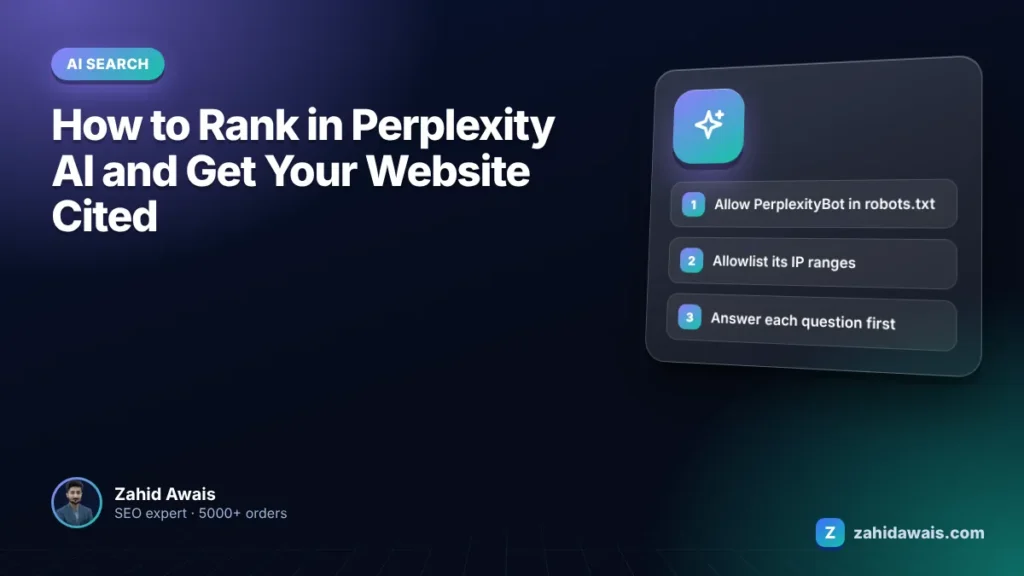
Perplexity shows its sources next to every answer. Being one of them starts with letting PerplexityBot in.
Read article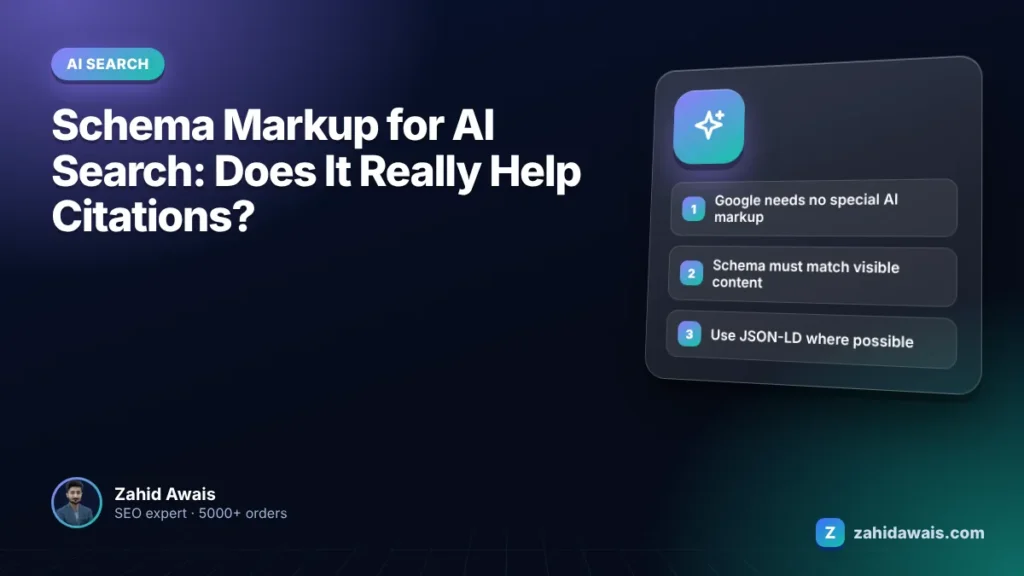
Schema helps machines understand your pages, but Google says no special markup is needed for its AI features. Here is the balanced view.
Read articleSend your website and I will reply with a free audit.