On-page SEO
Keyword Cannibalization Fix: How to Find and Solve It
How to spot pages competing for the same search, decide what to do with each one, and fix it without losing traffic.
Read articleIf your page does not match what searchers want, no amount of links will keep it on page one. Here is how to read search intent and choose the right page type.
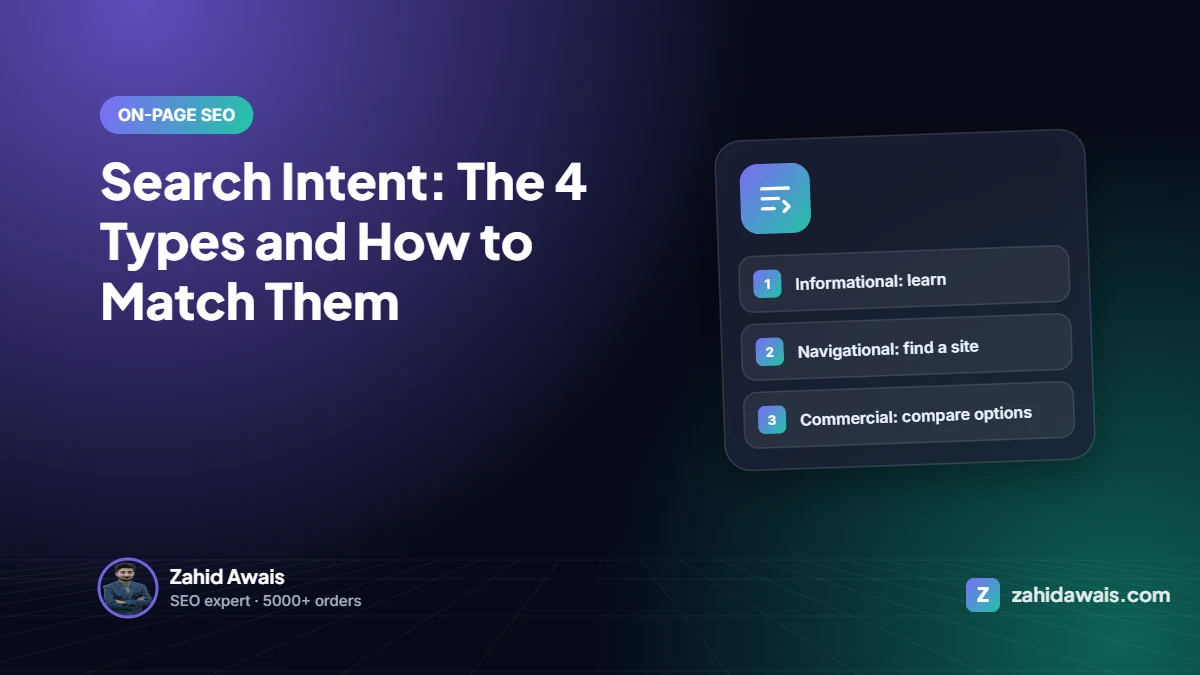
This guide explains search intent and how to match it, the first check in my on-page SEO checklist.
Search intent is the goal behind a search. The four common types are informational (learn), navigational (go to a site), commercial (compare before buying) and transactional (buy or act now). To match intent, search the keyword, look at what kind of pages rank (guides, lists, product pages, tools), and create the same type of page, only better.
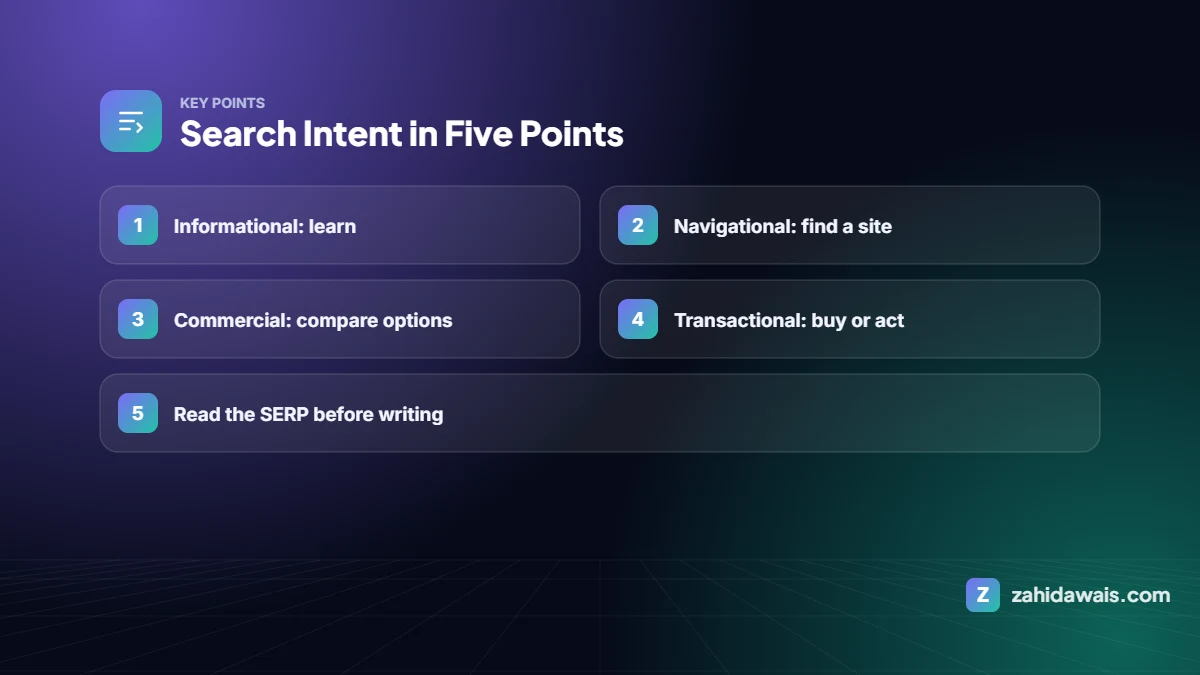
| Intent | Searcher wants to | Example query | Best page type |
|---|---|---|---|
| Informational | Learn or understand | what is a backlink | Guide, explainer |
| Navigational | Reach a specific site | zahid awais seo | Home, about, brand page |
| Commercial | Compare options | best link building services | Comparison, review, list |
| Transactional | Buy or take action | buy guest posts | Service, product, pricing page |
Preview how your page will look in results with the mobile SERP preview.
Some searches have mixed intent. “link building” shows guides and service pages together, because some searchers want to learn and others want to hire. In that case, pick the intent closest to your goal, and link to the other type of page. For example, my link building guide serves learners and links to the link building service for buyers.
A company tries to rank its “Guest post services” sales page for “how to write a guest post”. The top results are all step-by-step guides. The fix is a new guide answering that question, which then links to the service page for readers who would rather hire someone.
I fix titles, meta descriptions, headings, internal links and schema across your whole site, page by page, with a before and after report.
The goal behind a search: to learn something, find a site, compare options or buy.
Search it and study the top results: page types, formats, angles and SERP features show what Google thinks searchers want.
Usually one main intent per page works best. Link to separate pages for other intents.
Yes. Seasonality, news and new products can shift what ranks, so recheck important keywords regularly.
Matching intent is central to how Google ranks helpful results. A page that misses intent rarely ranks well.
Facts checked against these official pages on 10 October 2026. Read my editorial policy.
How to spot pages competing for the same search, decide what to do with each one, and fix it without losing traffic.
Read article
E-E-A-T is how Google's quality raters judge whether content comes from someone who knows the topic. It is not a single ranking factor, but the signals behind it shape what ranks.
Read article
Good keyword research finds searches your buyers make that your site can realistically win. Here is the process I use, from seed list to a prioritised plan.
Read articleSend your website and I will reply with a free audit.