Anchor Text Ratio Calculator
An anchor text ratio calculator is a tool that classifies each backlink anchor and divides the count in each…
Turn a referring domain goal into a steady monthly plan and compare it with your past pace.
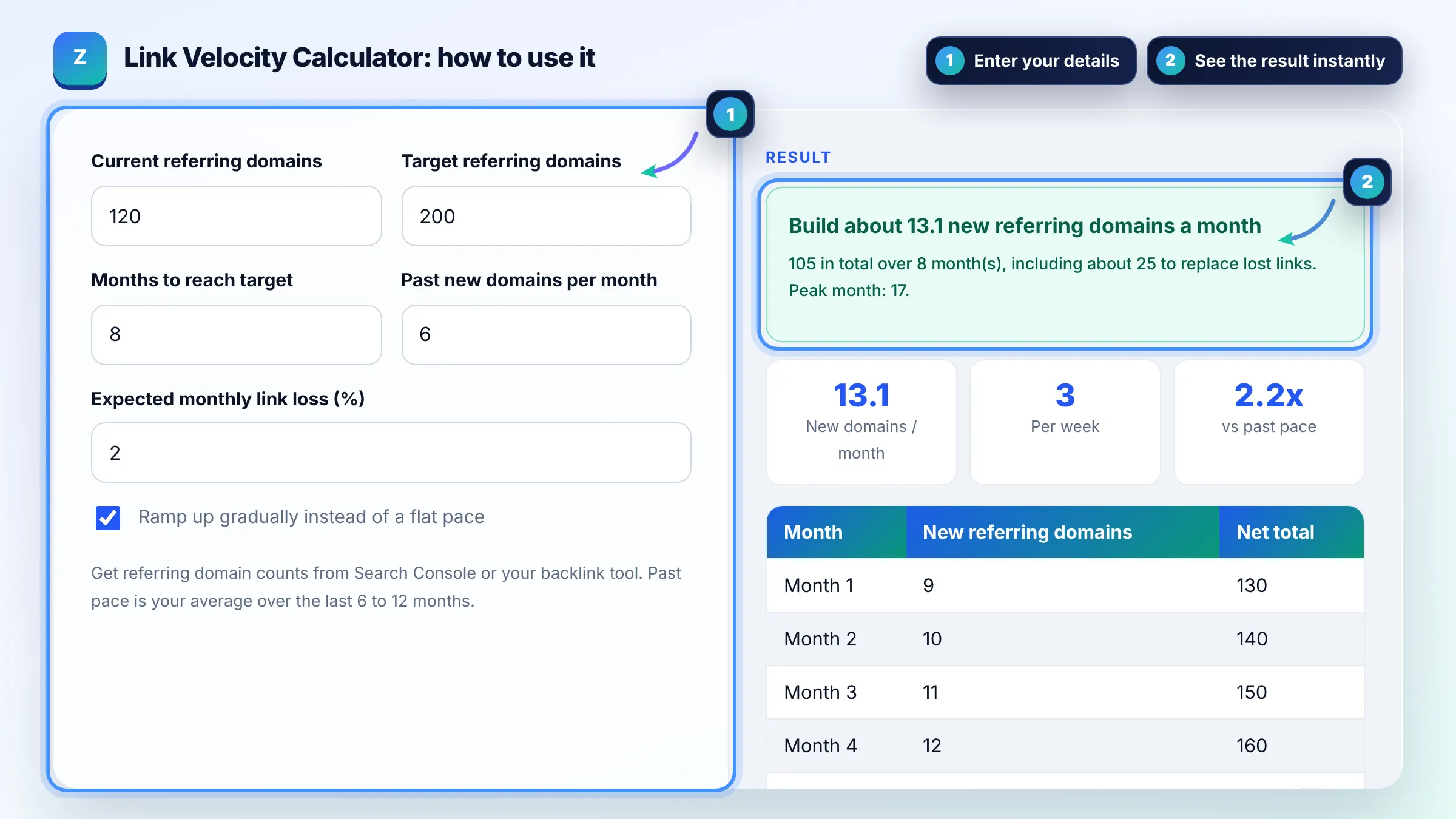
Get referring domain counts from Search Console or your backlink tool. Past pace is your average over the last 6 to 12 months.
| Month | New referring domains | Net total |
|---|
The free link velocity calculator runs in your browser, needs no sign-up and never sends what you type anywhere.
A link velocity calculator works out how many new referring domains you need per month to reach a target, adds links you will likely lose, and compares the pace with your history. Rule of thumb: stay within about 1.5 to 3 times your past monthly pace unless real news or content drives faster growth.
A link velocity calculator is a planning tool. New domains needed = (target minus current referring domains) + expected losses, where losses = running total x monthly loss rate. Monthly pace = total needed / months, split evenly or on a gradual ramp, and compared with your past monthly average.
There is no official safe number, because Google evaluates how links are earned, not a speed limit. As a rule of thumb, growth within about 1.5 to 3 times your past monthly pace looks normal for most sites. Faster growth is fine when it comes from real news, viral content or PR.
Fast growth alone is not a violation, but a sudden spike of paid, exchanged or automated links is a common pattern of link spam. Google lists buying links, excessive link exchanges and automated link creation in its spam policies. Earned links from coverage are not a problem.
Most small business sites do well with roughly 4 to 15 new referring domains a month. The right number depends on the gap to your competitors and the time you have. Use this calculator with a realistic target and timeline rather than a fixed number.
| Site stage | Typical new referring domains per month | Notes |
|---|---|---|
| New site (under 6 months) | 2 to 8 | Start with citations, partners and outreach |
| Growing small business | 5 to 15 | Steady guest posts and resource links |
| Established site | 15 to 50 | Content and PR earn links on their own |
| Major brand or news site | 50+ | Coverage drives most new links |
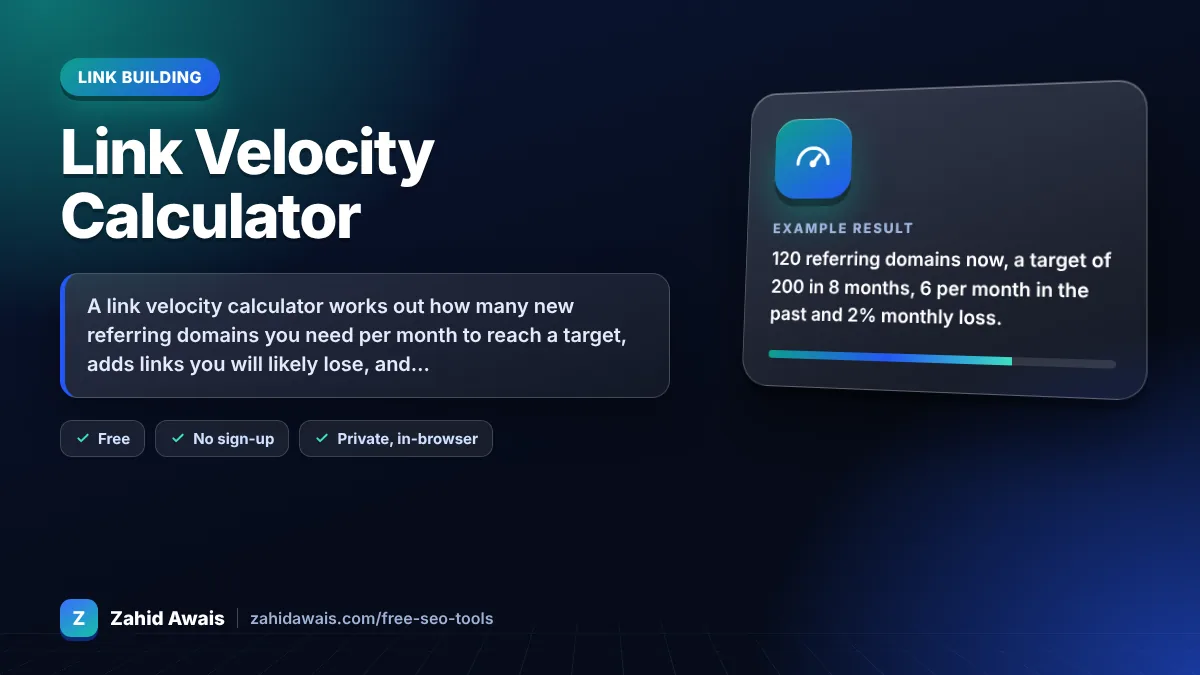
Example: 120 referring domains now, a target of 200 in 8 months, 6 per month in the past and 2% monthly loss. The gap is 80 and expected losses are about 25, so you need about 105 new domains, roughly 13.1 a month, which is about 2.2x your past pace.
Link velocity is the rate at which a site gains new backlinks or referring domains over time, usually measured per month. It is an SEO industry concept for planning and spotting unusual spikes. Google has not published it as a ranking factor.
One site can add hundreds of links through a sidebar or footer, which inflates backlink counts. Referring domains count each linking site once, so they show how many separate sites chose to link to you and give a steadier planning number.
Sites delete posts, change links and expire, so every profile loses some referring domains each month. If you ignore losses you will fall short of your target. A 1 to 3% monthly loss rate is a common estimate for planning.
Look at the pages ranking in the top 5 for your main keyword and note their referring domains. Use the median as a target, not the highest number, and remember that content quality and relevance matter as much as link counts.
A ramp starts lower and grows, which fits most campaigns because outreach lists, content and relationships take time to build. A flat pace is simpler to manage. Both reach the same total, so pick the one your team can sustain.
No. All math runs in your browser with plain JavaScript. Your referring domain numbers are not sent anywhere, saved or tracked, and refreshing the page resets the example values.
Facts checked against these official pages. Read how I check facts in my editorial policy.
An anchor text ratio calculator is a tool that classifies each backlink anchor and divides the count in each…
A link building cost calculator is a budgeting tool. Monthly cost = links per month x (outreach or placement…
A backlink tracker template is a structured log of your links. This builder adds a row per link, extracts the…
Send your website and I will check it for you, free.
One short email when something new goes live: articles, free SEO tools, package updates, discounts and price alerts. No spam, unsubscribe in one click.