E-commerce SEO
Churn Rate vs Retention Rate: Formulas, Differences, Example
Churn rate vs retention rate: what each measures, the formulas, why they do not always add to 100%, and how to turn…
Read articleProduct pages rarely earn links on their own. Stores win links with guides, gift lists, suppliers, creators and PR. Here are nine methods and where to point the links.
This guide covers e-commerce link building: how online stores earn backlinks safely and which pages should receive them. It combines my link building and e-commerce SEO work.
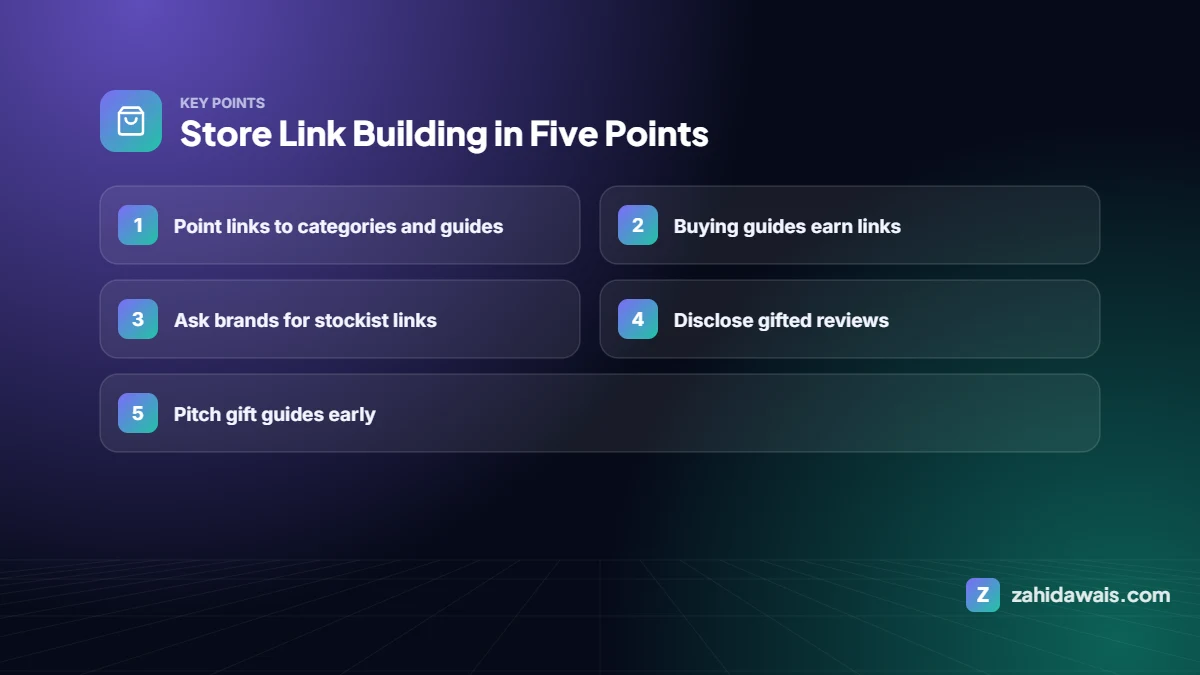
Online stores earn links best with content and relationships, not product pages alone. Publish buying guides and tools, get listed by your suppliers and brands, send products to genuine reviewers, pitch gift guides and journalists, and place guest posts on relevant niche sites. Point most links at categories and guides, then pass value to products through internal links.
| Page | Share of links | Why |
|---|---|---|
| Home page | Large, branded | Natural for brand mentions and PR |
| Category / collection pages | Large | Target the biggest shopping keywords |
| Buying guides and tools | Medium | Easiest to earn links for |
| Individual products | Small | Hero products only; products come and go |
Use mostly your store name and URL, with category phrases like “waterproof hiking boots” as a smaller share. See the anchor text ratio guide.
An outdoor gear store publishes “How to choose a sleeping bag temperature rating” with a simple chart. It gets cited by hiking blogs, which link to the guide; the guide links to the “Sleeping bags” collection. Plus a few guest posts on camping sites pointing to the collection with partial match anchors. The collection climbs without a single link to a product page.
I have placed 5000+ links for clients, including brands like Capterra UK, Adobe and OKX. I only use real sites with real traffic, and every link is checked live for 6 months.
Mostly to categories, guides and the home page. Use internal links to pass value to products, and link only to hero products directly.
They are fine when disclosed and the links are marked sponsored, as Google’s policies require for paid or gifted placements.
Supplier and brand stockist pages, plus useful buying guides, are often the easiest starting points.
Compare your categories with the top-ranking competitors’ pages and match their quality links over time.
Yes, when you have something newsworthy: original data, a useful tool or an expert angle.
Facts checked against these official pages on 10 October 2026. Read my editorial policy.
Churn rate vs retention rate: what each measures, the formulas, why they do not always add to 100%, and how to turn…
Read article
Show shipping costs, delivery times and return policies in Google Search with ShippingService and MerchantReturnPolicy markup, or Merchant Center settings.
Read article
How to calculate break-even ROAS: find your contribution margin, divide 1 by it, then set target ROAS, ACoS and CPA for profit.…
Read articleSend your website and I will reply with a free audit.