Link building strategy
Link Building for New Websites: A Practical 6 Month Plan
A new site needs a few trusted links, not a big package. This month by month plan shows what to build and when.
Read articleDofollow links pass ranking value, nofollow links ask Google not to. Since 2019 Google treats nofollow, sponsored and ugc as hints. Here is what that means for your links.
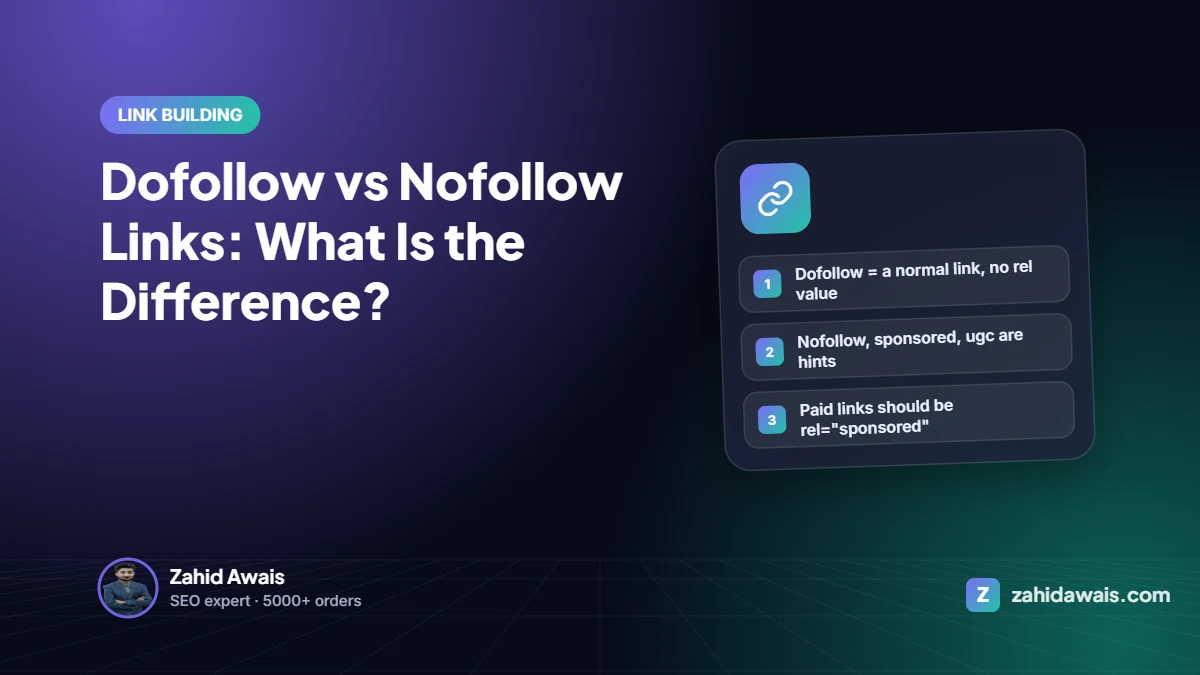
This guide explains the difference between dofollow and nofollow links, the newer sponsored and ugc values, and which ones you actually need. It is part of my link building guide.
A dofollow link is a normal link with no rel restriction, so it can pass ranking value. A nofollow link carries rel="nofollow", which asks Google not to pass value or crawl through it. Google treats nofollow, sponsored and ugc as hints, not strict rules. A natural backlink profile has both types.
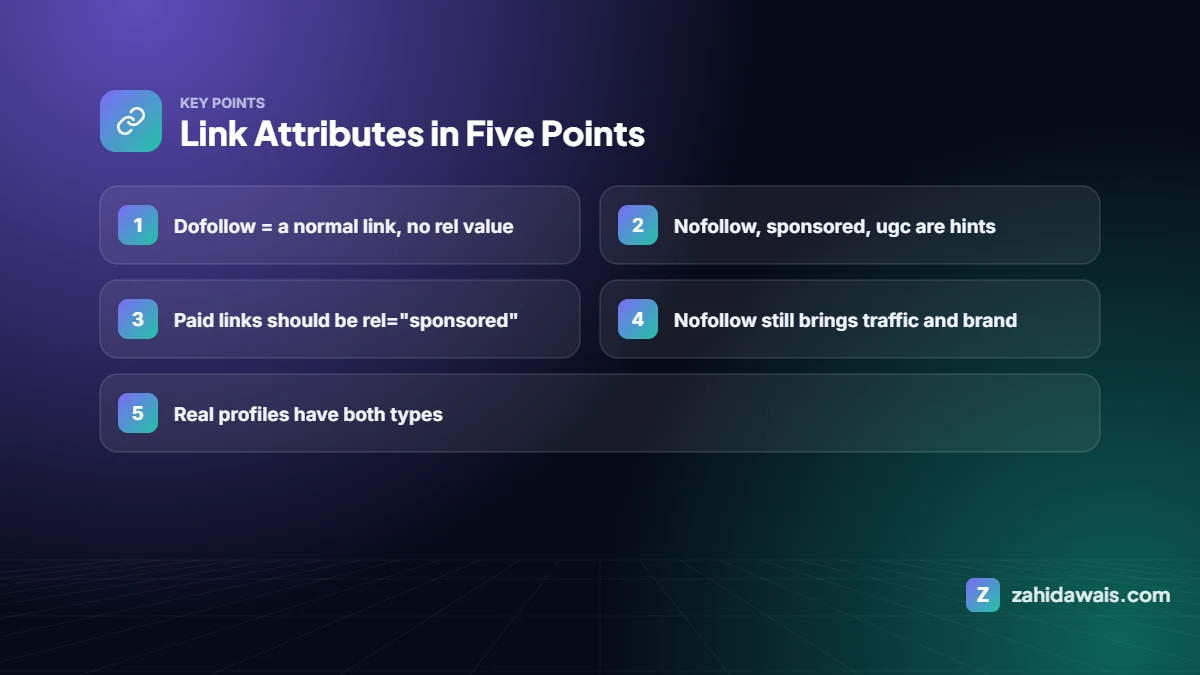
There is no rel="dofollow" attribute in HTML. “Dofollow” simply means a normal link with no nofollow, sponsored or ugc value:
<a href="https://example.com/">example</a>Google can follow this link, crawl the target page and count it as a vote of trust. Most editorial links, guest post links and niche edits are dofollow, and these are the links that move rankings.
A nofollow link adds rel="nofollow":
<a href="https://example.com/" rel="nofollow">example</a>It tells Google: “I am linking to this page, but I do not want to vouch for it.” Social media links, many forum and comment links, and some big news sites use nofollow by default.
In 2019 Google added two more specific values. You can also combine them, for example rel="ugc nofollow".
| Value | Use it for | Google treats it as |
|---|---|---|
| (none) = dofollow | Normal editorial links you stand behind | Can pass ranking value |
sponsored | Ads, paid placements, affiliate and sponsored links | Hint: usually not followed |
ugc | User-generated content: comments, forum posts | Hint: usually not followed |
nofollow | Any link you do not want to endorse when the other values do not fit | Hint: usually not followed |
Because these are hints, Google may still crawl a nofollowed page if it finds it elsewhere, for example in a sitemap or through other links.
They pass little or no direct ranking value, but they are not useless:
Google has never published a “right” ratio, so treat any number as a rule of thumb. In the profiles I review, healthy sites usually have a clear majority of dofollow links from relevant sites, plus a steady share of nofollow links from social profiles, forums, directories and news. What matters more is that each link is real and relevant.
A local plumbing company with 60 linking domains might have 40 dofollow links from local news, trade blogs and supplier pages, and 20 nofollow links from social profiles, directories and community forums. That looks natural. 60 dofollow links from unrelated “write for us” sites, all with the anchor “emergency plumber”, does not.
<a> tag. If you see rel="nofollow", sponsored or ugc, it is not a normal dofollow link.<meta name="robots" content="nofollow"> tag makes every link on the page nofollow.Google’s guidance is that paid and sponsored links should be qualified with rel="sponsored" (nofollow is also acceptable). Paid links that pass ranking value are against Google’s spam policies. When you work with any link provider, focus on real sites with real readers and editorial content, and understand the risk before you buy. My guest posts vs PBN links guide explains the difference between safe and risky options.
Usually no. Link out normally to useful sources, it helps readers and shows you did your research. Use sponsored for ads and affiliate links, and ugc for comments. Do not use nofollow on your own internal links to “save” link value; to keep a page out of search, use noindex instead, and block crawling with robots.txt only when you really need to.
I have placed 5000+ links for clients, including brands like Capterra UK, Adobe and OKX. I only use real sites with real traffic, and every link is checked live for 6 months.
No. A dofollow link is just a normal link without nofollow, sponsored or ugc. Adding rel=”dofollow” does nothing.
Yes, sometimes. Since 2019 Google treats nofollow, sponsored and ugc as hints, so it may crawl or use them in some cases.
Most links from social networks like Facebook, X and LinkedIn posts are nofollow or redirect links. They help with traffic and brand reach, not direct rankings.
Google recommends rel=”sponsored” for affiliate and paid links. rel=”nofollow” is also acceptable.
No. Nofollow links do not hurt rankings. They simply pass little direct value.
Facts checked against these official pages on 10 October 2026. Read my editorial policy.
A new site needs a few trusted links, not a big package. This month by month plan shows what to build and when.
Read article
A link on a page Google has not indexed does little for you. Here is why linking pages go unindexed and the safe ways to help Google find them.
Read article
Most sites never need the disavow tool. Here is how to spot genuinely harmful links, when Google says disavowing makes sense, and how to build the file correctly.
Read articleSend your website and I will reply with a free audit.