Guest posting and link types
Are Quora Backlinks Dofollow? What They Really Do for SEO
Quora links are mostly nofollow, but helpful answers on the right questions still bring visitors and brand reach.
Read articleAn honest answer from 5000+ link orders: guest posts work when they reach real readers, not when they chase link counts.
This article gives you an honest 2026 answer to are guest posts still worth it, based on Google’s own guidance and on what I see across more than 5000 link orders.
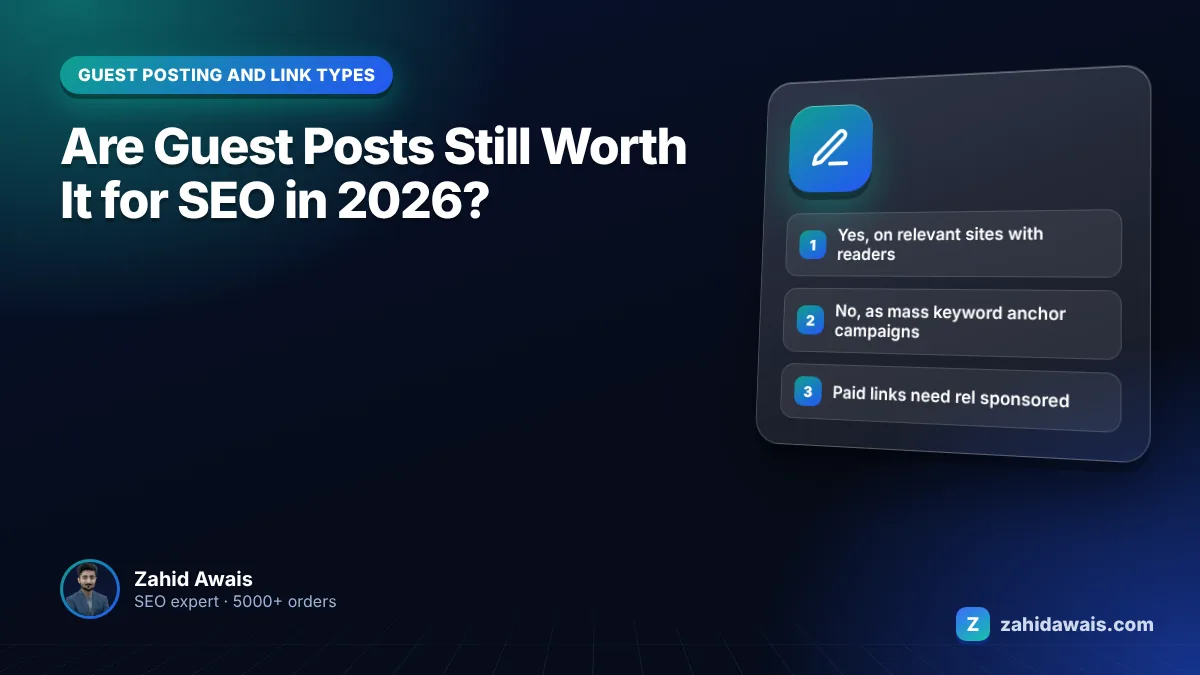
Are guest posts still worth it? Yes, when they put useful content in front of a relevant audience on a site with real readers. They are not worth it as a mass link tactic with keyword anchors, which Google warns against. Judge them by relevance, referral visits and brand reach, not by link count alone.
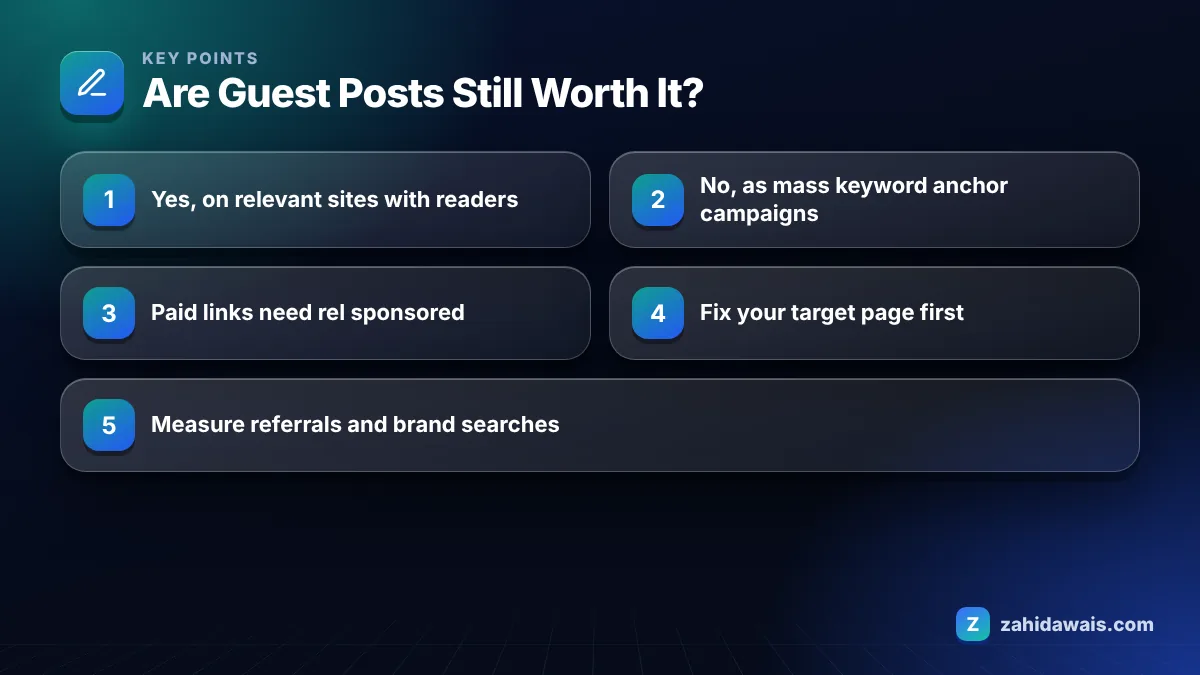
Guest posting still works when the article is useful to the host site’s readers and the site is relevant to your business; it does not work as a shortcut to rankings through volume. The tactic did not die, but the low-quality version of it stopped being worth the money years ago.
Links remain part of how Google discovers and understands pages. Google’s link best practices say it uses links as a signal when determining the relevancy of pages and to find new pages to crawl. A well placed guest post on a relevant site can help with both, especially for newer sites that few people know about yet.
What changed is the kind of guest post that pays off. In my orders, the placements that clients come back to repeat are almost always on focused sites with steady readers. The ones that disappoint are on general “publish anything” sites, even when their authority scores look impressive.
Guest posts also do things that have nothing to do with link signals. They put your name in front of a new audience, they can bring referral visits, and they give people a reason to search for your brand later.
Google does not penalize guest posts as such; it acts against guest posting used mainly to build links that manipulate rankings. The difference is intent and scale, and Google has described it clearly.
In 2017 Google published a reminder about links in large-scale article campaigns. It said Google does not discourage articles that inform users, educate another site’s audience or bring awareness to a cause or company. It warned against campaigns where links are the main goal, pointing to signs such as keyword-rich anchor text, articles published across many sites or in large numbers on a few sites, writers who lack knowledge of the subject, and the same or similar content repeated across articles.
For paid placements there is one more rule. Google’s guide on how to qualify outbound links asks site owners to mark advertisements and paid placements with rel=”sponsored”, with rel=”nofollow” also acceptable. A paid guest post whose link passes ranking credit without such an attribute falls under Google’s link spam policies.
So the realistic risks are these: a manual action for unnatural links if the pattern is obvious, or links that Google’s systems simply ignore. Neither outcome makes a cheap mass campaign worthwhile.
Guest posting is worth the money when the cost per useful placement is lower than what the same reach would cost through ads, PR or content you produce yourself. That depends far more on site selection than on price.
Here is how the main approaches compare from what I see in practice:
| Approach | Typical outcome | Worth it? |
|---|---|---|
| Bulk cheap posts on general sites | Few readers, links often ignored, risk of unnatural link pattern | Rarely |
| Exact match anchors across many sites | Matches the pattern Google warns about | No |
| Few posts on relevant, read sites | Referral visits, brand searches, relevant links | Usually yes |
| Expert article on an industry publication | Authority, leads, possible follow-up coverage | Yes, if you can get it |
| Guest posts with no plan for the target page | Links to pages that cannot convert or rank | No |
The table is my practical summary, not a Google rule. Prices for each approach vary widely, and my article on link building cost in 2026 explains what drives them. The cheapest option almost never turns out to be the best value.
Guest posts are not worth it when your own site has bigger problems, such as pages that are not indexed, thin content or a poor offer. Links cannot fix a page that does not deserve to rank.
Before I take on a link building order, I check a few basics on the client’s site:
If the answer to any of these is no, I usually recommend fixing the page first. My on-page SEO service exists for exactly that reason. Spending on guest posts for a page that is not ready is the most common waste I see.
You make guest posts worth it by choosing relevant sites, writing articles people want to read, using natural anchors and measuring results beyond rankings. Follow these steps for every campaign.
My link building guide walks through this process in more detail, including how I spread placements over time so the profile grows steadily.
Suppose a small accounting software company spends $600 on four guest posts at $150 each. Option one puts all four on general news sites with no finance readership. Option two puts them on two small business blogs and two bookkeeping sites with steady organic traffic.
After three months, the company checks its analytics. Option one would typically show almost no referral visits and no change in the target pages. With option two, even 40 referral visits in total means a cost of $15 per visitor from a highly relevant audience, plus four topical links and new brand exposure. If a trial signup is worth more than $15 to the business, option two has paid off before counting any search benefit. The numbers here are illustrative; plug in your own.
This simple sum is the test I suggest to every client. If a placement cannot plausibly bring readers, brand exposure or a relevant link, it is not worth buying, no matter how cheap it is.
If you want help selecting sites, my link building services are built around this approach: fewer, better placements on sites with real readers. I cannot promise rankings, and you should be careful with anyone who does, but I can make sure every dollar goes to placements that make sense.
No. Guest posting that puts useful articles on relevant sites with real readers still brings exposure, referral visits and relevant links. Mass guest posting with keyword anchors on unrelated sites is the version that stopped being worthwhile.
There is no fixed number, and nobody can honestly guarantee rankings from a set quantity. It depends on your competitors, your content and your site’s overall quality. A few strong, relevant placements often do more than many weak ones.
Yes. A nofollow or sponsored link on a site with real readers can bring referral visits, brand searches and further coverage. Its value comes from the audience, which is why relevance matters more than the attribute.
Expect several weeks for the host page to be crawled and indexed, and usually a few months before you can judge any effect on your target pages. Referral visits, if any, start as soon as the post is live.
Writing them yourself and pitching editors earns stronger editorial placements but takes time. Buying saves time but makes the link a paid one that should be qualified. Many businesses combine both approaches.
Brand names, page topics and natural phrases that fit the sentence are best. Google lists keyword-rich anchor text in large-scale guest posting as a link spam pattern, so avoid repeating exact match commercial keywords.
Facts checked against these official pages. Read how I check facts in my editorial policy.
Quora links are mostly nofollow, but helpful answers on the right questions still bring visitors and brand reach.
Read article
An honest answer from a provider who sells them: useful in a small supporting role, harmful when built in bulk.
Read article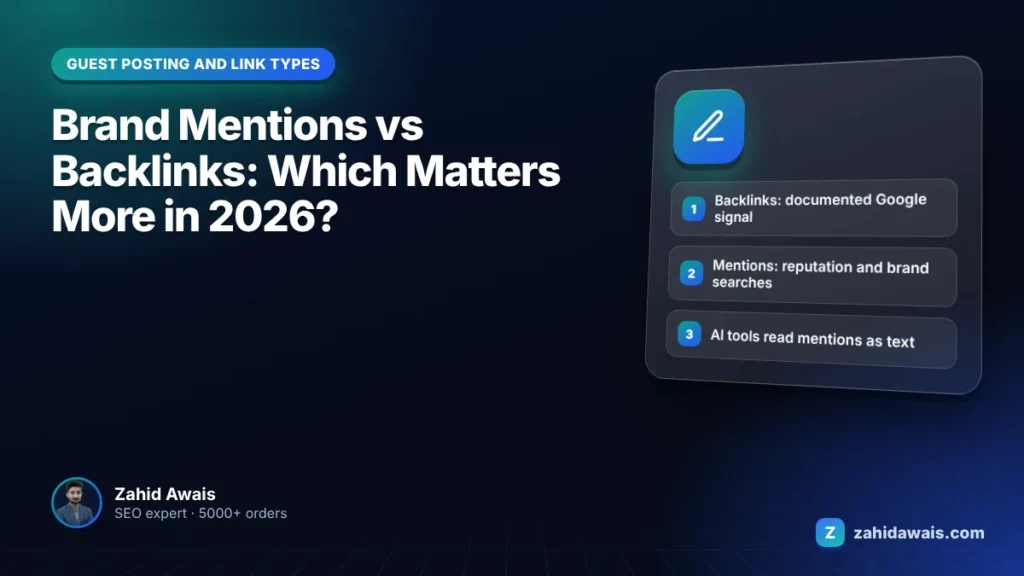
Links help Google find and understand you. Mentions help people and AI tools recognise you. Here is how to balance both.
Read articleSend your website and I will reply with a free audit.