On-page SEO
Keyword Cannibalization Fix: How to Find and Solve It
How to spot pages competing for the same search, decide what to do with each one, and fix it without losing traffic.
Read articleE-E-A-T is how Google's quality raters judge whether content comes from someone who knows the topic. It is not a single ranking factor, but the signals behind it shape what ranks.
This guide explains E-E-A-T and the practical steps I use to show it on client sites and this one. It is part of my on-page SEO checklist.
E-E-A-T stands for Experience, Expertise, Authoritativeness and Trust. It comes from Google’s Search Quality Rater Guidelines, which human raters use to evaluate results. It is not one ranking factor, but Google’s systems aim to reward content that shows these qualities. Trust is the most important part. You show E-E-A-T with clear authors, first-hand experience, accurate sourced facts, a strong reputation and an honest, transparent site.
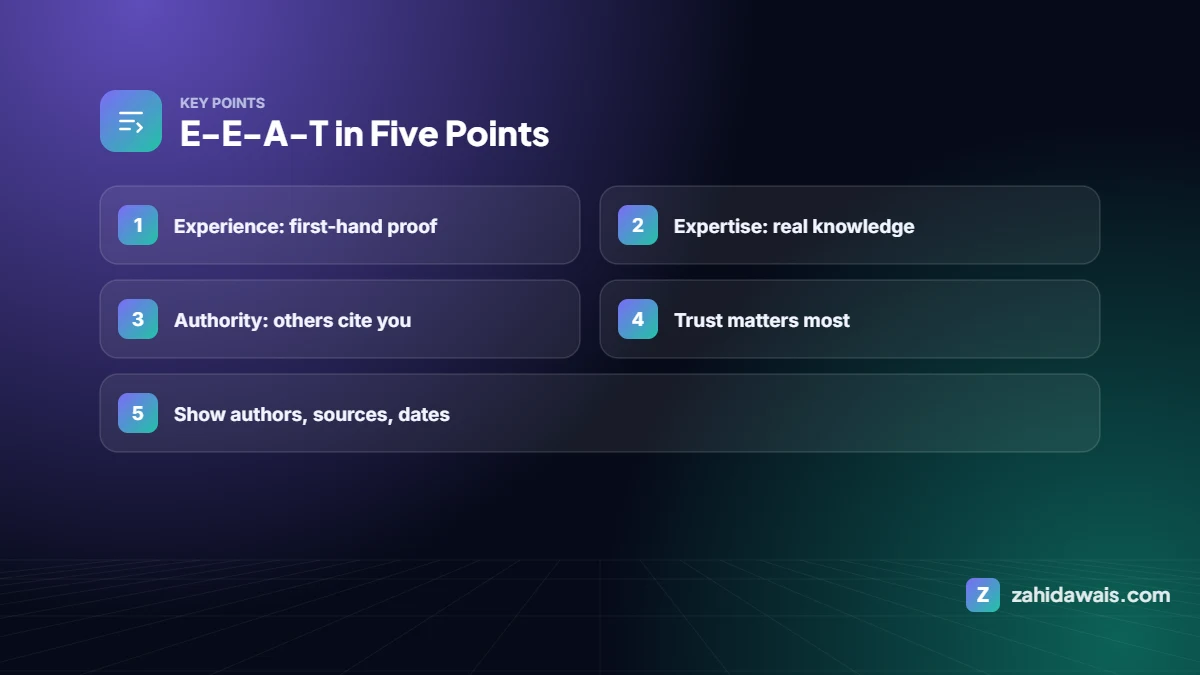
| Letter | Question it answers | How to show it |
|---|---|---|
| Experience | Has the creator actually used or done this? | First-hand examples, photos, results, case studies |
| Expertise | Does the creator know the subject? | Author bio, credentials, depth and accuracy |
| Authoritativeness | Is the creator or site a go-to source? | Mentions, links, reviews, citations by others |
| Trust | Is the page accurate, honest and safe? | Sources, contact details, policies, secure site, no deception |
For “Your Money or Your Life” topics such as health, finance, legal and safety, raters apply a higher standard, because poor information can cause real harm. SEO is not YMYL, but businesses buying SEO services are making money decisions, so trust signals still matter.
Google says it rewards helpful content however it is produced, but content made mainly to rank, at scale and without value, breaks its spam policies. AI can help with drafts; experience, accuracy and judgement still have to come from a real expert.
Two articles on “how to choose guest post sites”. One is anonymous, generic and cites nothing. The other is written by a named link builder, includes a 12-point checklist from real orders, examples of rejected sites, and links to Google’s spam policies. The second shows experience, expertise and trust at a glance.
I fix titles, meta descriptions, headings, internal links and schema across your whole site, page by page, with a before and after report.
Experience, Expertise, Authoritativeness and Trust.
Not a single factor. It describes qualities Google’s systems try to reward, using many signals.
Google’s rater guidelines say trust is the most important part.
Not always. Real, demonstrated experience and accurate, detailed content can show expertise, especially outside YMYL topics.
It helps machines connect content to a real person, but the experience and reputation behind it matter most.
Facts checked against these official pages on 10 October 2026. Read my editorial policy.
How to spot pages competing for the same search, decide what to do with each one, and fix it without losing traffic.
Read article
Good keyword research finds searches your buyers make that your site can realistically win. Here is the process I use, from seed list to a prioritised plan.
Read article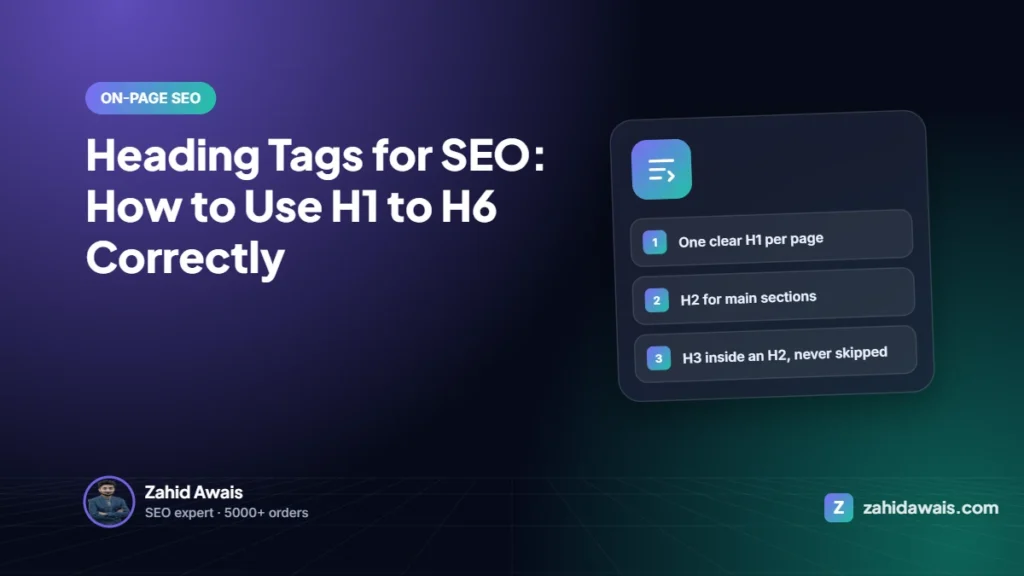
Headings are the outline of your page for readers, Google and AI tools. Here is how many H1s you need, how to nest H2 to H6 and the mistakes that confuse everyone.
Read articleSend your website and I will reply with a free audit.