On-page SEO
Keyword Cannibalization Fix: How to Find and Solve It
How to spot pages competing for the same search, decide what to do with each one, and fix it without losing traffic.
Read articleGood keyword research finds searches your buyers make that your site can realistically win. Here is the process I use, from seed list to a prioritised plan.
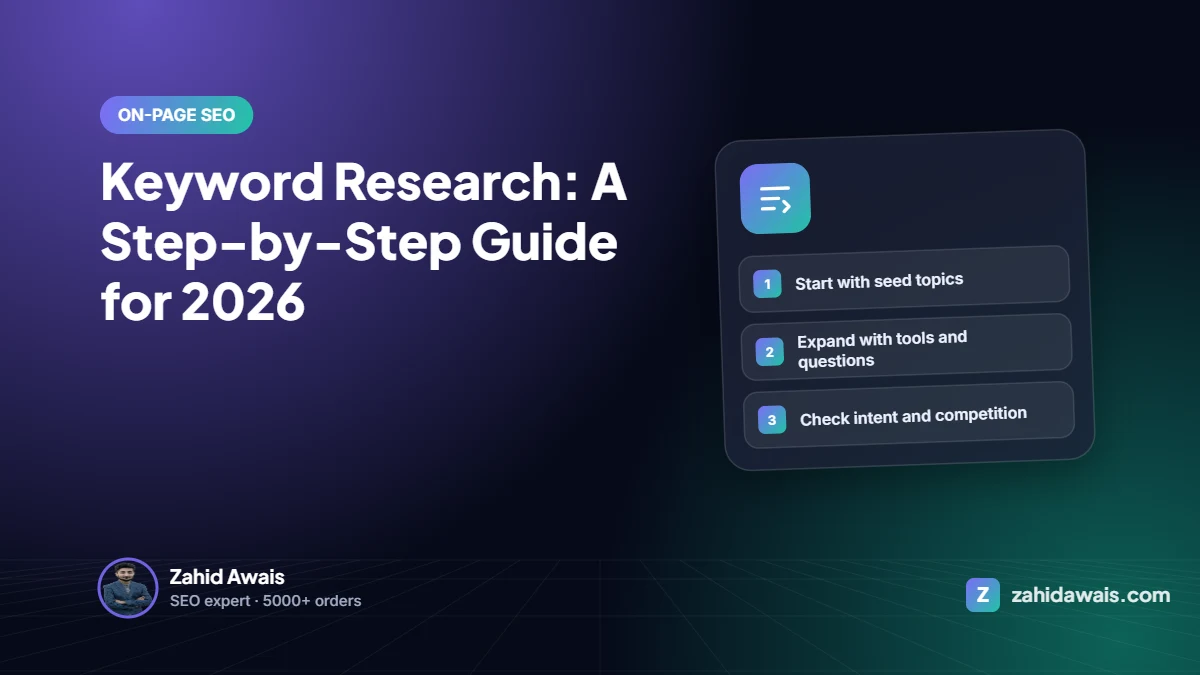
This guide walks through keyword research step by step, ending with a plan you can publish from. It is part of my on-page SEO checklist.
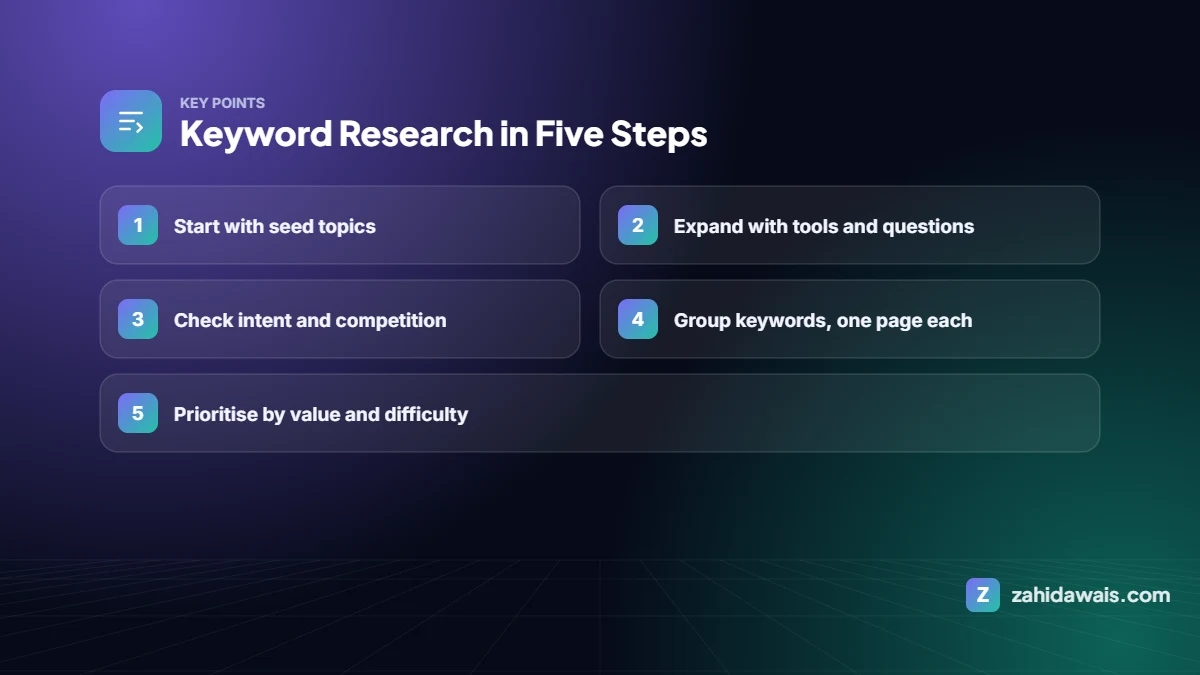
Keyword research means finding the words people type into search engines that match what you offer, then choosing the ones worth targeting. Start with seed topics, expand them with tools and real questions, check search intent and competition, group close keywords into one page each, and prioritise by business value and how easily you can rank.
| Metric | What it tells you | Watch out for |
|---|---|---|
| Search volume | Rough monthly searches | Estimates; low volume can still convert well |
| Keyword difficulty | How hard the top 10 is to beat | Tool-specific; check the actual results |
| Intent | What the searcher wants | Mixed intent searches |
| Business value | How close the searcher is to buying | High volume but no buyers |
| Trend | Rising or falling interest | Seasonal spikes |
Long-tail keywords are longer, more specific searches like “anchor text ratio for guest posts” instead of “anchor text”. They have lower volume but clearer intent and less competition. For new and small sites they are usually the fastest path to traffic, and many together add up to more than one big keyword. They also match the way people ask AI assistants.
| Priority | Keyword type | Why |
|---|---|---|
| 1 | High value, low difficulty, clear buying intent | Fast wins that bring leads |
| 2 | Questions your buyers ask before buying | Builds trust and topical authority |
| 3 | Keywords where you rank 8 to 20 already | Small improvements move them up |
| 4 | Big, competitive head terms | Long-term targets supported by the rest |
A link building provider might find “buy backlinks” (very competitive, mixed intent), “how many backlinks per month” (informational, low difficulty), “guest post price” (commercial) and “dofollow vs nofollow” (informational). A sensible plan publishes the low-difficulty guides first, links them to the service page, and targets the head term over time.
Group your keyword clusters under pillar topics and plan one page per cluster. That is how this site is organised; see the semantic SEO guide for the method.
I fix titles, meta descriptions, headings, internal links and schema across your whole site, page by page, with a before and after report.
Finding and choosing the search terms your audience uses, so you can create pages that match them.
One main keyword plus its close variations and related questions with the same intent.
No. Intent and business value matter more. A low-volume keyword with buying intent can be worth far more than a high-volume one.
Yes. Search Console, autocomplete, People also ask, Keyword Planner and Google Trends give a solid start.
Do a full round when planning content, and review Search Console queries monthly for new opportunities.
Facts checked against these official pages on 10 October 2026. Read my editorial policy.
How to spot pages competing for the same search, decide what to do with each one, and fix it without losing traffic.
Read article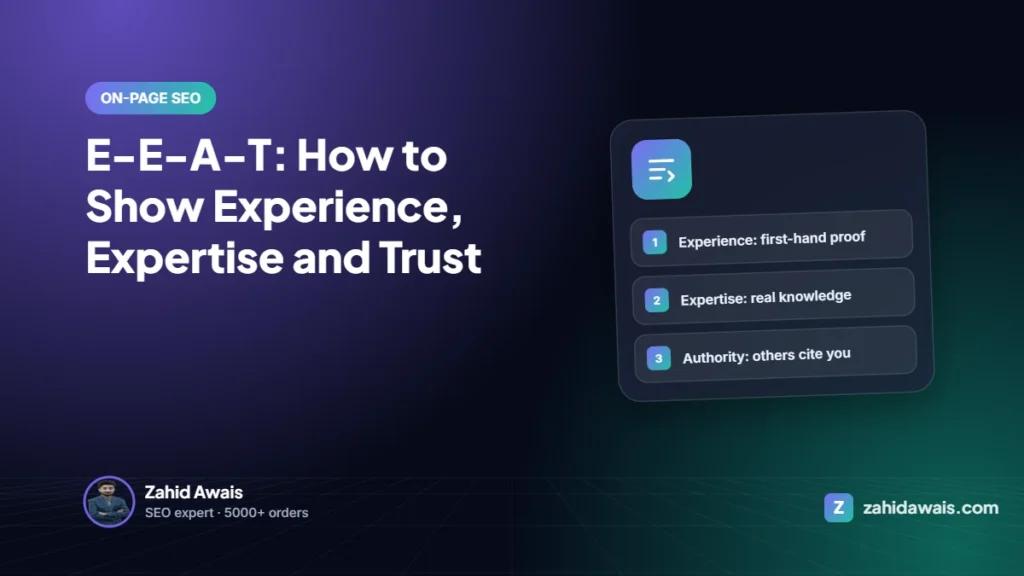
E-E-A-T is how Google's quality raters judge whether content comes from someone who knows the topic. It is not a single ranking factor, but the signals behind it shape what ranks.
Read article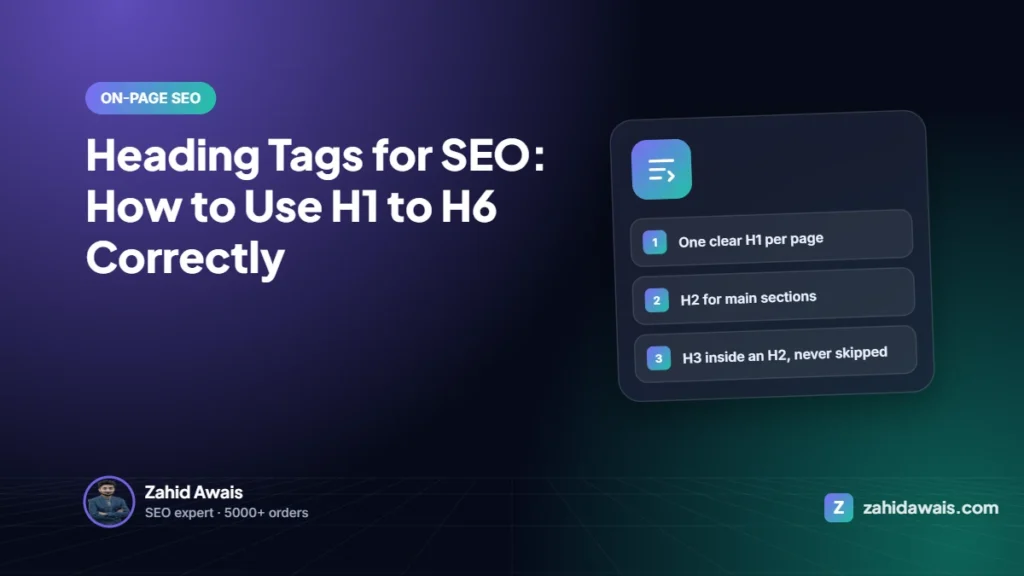
Headings are the outline of your page for readers, Google and AI tools. Here is how many H1s you need, how to nest H2 to H6 and the mistakes that confuse everyone.
Read articleSend your website and I will reply with a free audit.